Thursday, September 28, 2006

Sell Stocks Now


The Dow Jones Industrial Average reached its highest level in six years on Thursday afternoon but edged off the peak to finish just short of its all-time closing high. The S&P 500 hit a fresh a five-year high.
“The Dow is nothing but a flirt,” said Ken Tower, chief market strategist at Cybertrader. “It’s enjoying the attention and prolonging the mystery.”
The Dow will not reach another all-time closing high until at least 2009. We are currently in a long-term bear market. This rally will not last. Sell your index funds now. There is a 50% chance of a major ( greater than 15% drop in the Dow and S+P 500 indexes ) market crash in the next 45 days. If you are adventurous, buy Diamond and Spyder Put options.

Wednesday, September 13, 2006

Tort Reform Works

Medical Assurance Company of Mississippi
404 West Parkway Place
Ridgeland, Mississippi 39157
www.macm.net

FOR IMMEDIATE RELEASE
September 13, 2006

MACM Announces Premium Reduction for 2007

Medical Assurance Company of Mississippi (MACM) announced today that it will reduce its medical liability insurance rates across the board by 10 percent for 2007. This action was approved by MACM’s Board of Directors on September 6, 2006.

“We are very pleased to announce a rate reduction for our insureds for the second straight year,” Michael D. Houpt, President and Chief Executive Officer of MACM, said. “The favorable trends relative to losses and loss adjustment expenses that were evident in 2005 have continued through 2006; therefore our Board felt comfortable in making this decision.”

Numerous claims that were filed in late 2002 to avoid provisions in the tort reform packages passed by the Mississippi Legislature have been favorably resolved during this year. “We are finally disposing of large numbers of non-meritorious claims with little or no expense,” Houpt said. “Combined with the other positive effects of tort and judicial reform, our financial results to date indicate that another rate reduction is justified, and I trust that our insureds will be pleased.”

In September 2005, the Board of Directors reduced renewal rates for 2006 by 5 percent and in December 2005, granted a retroactive refund of up to 15 percent on 2005 premiums.

Mississippi leadership responded favorably to the news.

“This across the board reduction in medical liability rates by the largest insurer of doctors in Mississippi is a significant and welcome decision that will have an immediate positive impact,” Governor Haley Barbour said. “It is another concrete example of how tort reform is working to protect the quality and availability of health care by ending lawsuit abuse and leading to reduced medical liability rates in Mississippi. This is great news.”

Commissioner of Insurance George Dale said, “Mississippi continues to show insurance companies that recent reforms are working and do aid in providing and maintaining a fair and equitable marketplace. I commend MACM for establishing a financial position that allows for this second consecutive rate reduction. Reforms were needed and now benefits such as this reduction are the result.”

Founded in 1976, Medical Assurance Company of Mississippi is an organization of physicians and non-physician staff members dedicated to providing sound, stable insurance products and quality related services to physicians and other health care providers practicing in the state of Mississippi

Stanford Bans Drug Company Gifts to Doctors


Kevin MD links to an article about a new policy at Stanford:
Stanford University Medical Center will prohibit its physicians from accepting even small gifts like pens and mugs from pharmaceutical sales representatives under a new policy intended to limit industry influence on patient care and doctor education.
The policy would also apply to sales representatives from makers of medical devices and other companies, not just pharmaceutical companies. Company representatives would be barred from areas where patient treatment and doctor education occur, with some exceptions.
“We want to secure the public trust to value what happens in academic medicine,” Dr. Philip A. Pizzo, dean of the Stanford School of Medicine, said in an interview.
Stanford academic physicians will continue to be able to accept speaking fees (which can be up to $5000) for drug company dinners and CME seminars, but the residents won't get $1 pens. This really restores my trust in the Stanford University Medical Center Physicians.

Saturday, July 29, 2006

Nurses and Secretaries Demand Free Food


An article in the New York Times describes the common practice of drug reps providing free lunches for doctors' offices:
Free lunches occur regularly at doctors’ offices nationwide, where delivery people arrive with lunch for the whole office, ordered and paid for by drug makers to the tune of hundreds of millions of dollars a year.
Like the “free” vacation that comes with a time-share pitch attached, the lunches go down along with a pitch from pharmaceutical representatives hoping to bolster prescription sales. The cost of the lunches is ultimately factored in to drug company marketing expenses, working its way into the price of prescription drugs.

“We found that some offices get breakfast and lunch every day,” said Dr. Scott, who calls lunch the “currency” that buys access to doctors’ offices for drug representatives. He also noted that some doctors were hard pressed to meet payrolls and that the lunches provided an added benefit for their employees.
The deliveries often start even before lunchtime, with representatives bringing in pastries and large containers of coffee from Starbucks or Dunkin’ Donuts.
Ms. Slattery-Moschkau, the former pharmaceutical representative, said that nurses and staff members in some offices were quite demanding about lunch.
“It was almost a game, and it was unbelievable the animosity they would show if you did not bring the right kind of food, or if it was the third time they had pizza that week,”

I don't like to do drug company sponsored office lunches more than once a week, though not for any ethical reasons. I just prefer to go off by myself for a while and grab a sandwhich at Subway or McAlister's. The office lunches mainly benefit the office staff.

Friday, June 30, 2006

Superman Movie made by anti-Americans


Ever since artist Joe Shuster and writer Jerry Siegel created the granddaddy of all comic book icons in 1932, Superman has fought valiantly to preserve "truth, justice and the American way." Whether kicking Nazi ass on the radio in the '40s or wrapping himself in the Stars and Stripes on TV during the Cold War or even rescuing the White House's flag as his final feat in "Superman II," the Krypton-born, Smallville-raised Ubermensch always has been steeped in unmistakable U.S. symbolism.
But in the latest film incarnation, scribes Michael Dougherty and Dan Harris sought to downplay Superman's long-standing patriot act. With one brief line uttered by actor Frank Langella, the caped superhero's mission transformed from "truth, justice and the American way" to "truth, justice and all that stuff.""The world has changed. The world is a different place," Pennsylvania native Harris says. "The truth is he's an alien. He was sent from another planet. He has landed on the planet Earth, and he is here for everybody. He's an international superhero."
We were always hesitant to include the term 'American way'
Seems like a bad weekend to open the movie if the film-makers are ashamed of patriotism.

Friday, June 23, 2006

I'm Not One Of Those Fancy College-Educated Doctors

You want to know where I got my doctor's degree? At the Medical School of Hard Knocks, that's where. No matter what they say, advanced graduate studies won't teach you when somebody needs a shot of whiskey. Yale and Harvard don't tell you when to throw a bucket of water on a patient. And they can never teach you how to tell when someone just needs a good solid punch in the nose to bring them around.
I got my M.D. on the street. These people think they're suddenly a "doctor" because they memorized a lot of big words and took a bunch of formal tests. But there's plenty of things about being a doctor they'll never learn in their ivory-tower medical school.
For example, did you know that human intestines, if they spill out of the abdomen during surgery, can spool out all over the floor if you're not careful? You won't find that in a book, my friend.

Saturday, June 10, 2006

A Dangerous Obsession


An article in the Sunday New York Times Magazine describes the growing poker addiction problem among college students:
Online, Hogan would play 60 to 100 hands an hour — three times the number of his live games. There was no more shuffling between hands, no more 30-second gaps to chat with his friends or consider quitting. Each hand interlocked with the next. The effect was paralyzing, narcotic. "Internet poker induces a trancelike state," says Derevensky, the McGill professor, who once treated a 17-year-old Canadian boy who lost $30,000, much of it at PokerStars. "The player loses all track of time, where they are, what they're doing." When I spoke with an online hold-'em player from Florida who had lost a whopping $250,000 online, he told me: "It fried my brain. I would roll out of bed, go to my computer and stay there for 20 hours. One night after I went to sleep, my dad called. I woke up instantly, picked up the phone and said, 'I raise.' "
On-line poker is a dangerous and seductive mistress. I fight her allure (usually unsuccessfully) every night.

A Case of Plagiarism?


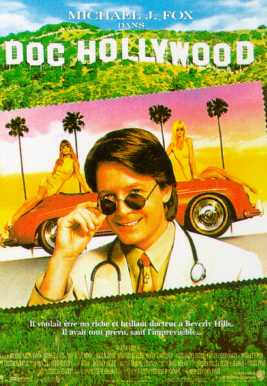
I took my son to see the movie "Cars" today. I was going to write a long post comparing the movie to "Doc Hollywood," but someone at Canada.com has already done so:
The makers of Doc Hollywood called. They want their movie back.
Cars rolls along like an animated, automotive version of that 1991 Michael J. Fox gem, from its basic plot points to its feel-good conclusion.
Stop us if you think you've heard this one before: A young hotshot on his way to Los Angeles causes a crash and gets stuck in a small town. Before he can leave, he must spend several days doing community service, only to find out that he likes the simple life there and that he's learned more about family and friendship than he'd ever imagined.
The main difference in Cars is that the characters are . . . well, they're cars, hence the title.

I was unable to find any attributation to the movie/book "Doc Hollywood" on the "Cars" website, or when I was watching the credits in the theatre. If Neil Shulman, MD didn't get a cut of the movie "Cars," he should sue.

Tuesday, May 16, 2006

Slate Comes Out in Favor of Tanning

From www.slate.com:
You can't stop tanning; the best you can do is help people control it. Toward that end, the industrialization of ultraviolet light is a blessing. It gives us the power to clarify, modulate, and customize dosage. Salons need oversight to make sure they help clients understand and manage this power. But if you shut them down or lock out teenagers, be prepared to enforce a dawn-to-dusk curfew or face an epidemic of skin cancer. If you liked back-alley abortions, you'll love backyard tanning.
For those of my readers in their teens and twenties, my advice to you is not to tan. If you do, you'll be sorry 5-10 years from now when you develop wrinkles. And there is always the risk of skin cancer.

Monday, May 15, 2006

Dogs and Ducks for Depression


I think that we're all aware of service animals for the physically disabled, especially the blind. But now patients with psychiatric disorders are claiming that their dogs are "emotional service dogs," often with dubious rationales:
"If you have backing of a medical professional and you can show a connection between a disabling condition and the keeping of an animal, I have 99.9 percent success," said Karen Copeland, a tenants' lawyer.
One of her current clients maintains that she needs an animal in her apartment because she is a recovering alcoholic and, apart from her pet, all her other friends are drinkers.

Even ducks are getting in on the act:
These days people rely on a veritable Noah's Ark of support animals. Tami McLallen, a spokeswoman for American Airlines, said that although dogs are the most common service animals taken onto planes, the airline has had to accommodate monkeys, miniature horses, cats and even an emotional support duck. "Its owner dressed it up in clothes," she recalled.
My opinion on the matter:
This isn't cute and is a total insult to the disabled community. They are ruining it for people who need it."

Thursday, May 11, 2006

Surgical Teamwork

The New York Times reports on a study of operating room communications:
"nurses often describe good collaboration as having their input respected, and physicians often describe good collaboration as having nurses who anticipate their needs and follow instructions."
There is a bit of a culture clash; nurses want respect, and surgeons want submissive, helpful nurses.

Monday, May 08, 2006

Dunlop Disease

A new epidemic is spreading across America:

A model's flesh squeezes out between her blue jeans and tank top in what is known as "Dunlop disease," as in her flab "dun lap" over her pants

Sunday, April 30, 2006

Hepatitis C


Hepatitis C is an increasingly common disease. Up to 90% of patients who have injected illicit drugs and between 7% and 10% of individuals who received blood or blood products prior to 1992 test positive for hepatitis C. Other risk factors include: 1) history of multiple sexual partners (though hepatitis C is much less readily transmittable sexually than the hepatitis B virus); 2) chronic hemodialysis treatment; 3) being the child of a hepatitis C positive woman; 4) tattoos or body piercings; and 5) needle stick accidents. Hepatitis C should also be suspected in anyone with unexplained elevated serum alanine aminotransferase (ALT) levels or signs of liver disease, such as jaundice or hepatomegaly.
Acute hepatitis C infection often does not come to clinical attention. Patients may experience nonspecific symptoms such as malaise, abdominal pain, and nausea. A few have jaundice. Acute hepatitis C infection progresses to chronic hepatitis C in approximately 75% of patients. It is chronic hepatitis C that is of chief concern to psychiatrists, especially those who work with chemically dependent populations.
The screening test for hepatitis C is the ELISA test for antibody to the hepatitis C virus (anti-HVC), which can sometimes give false-positive results. The confirmatory test is HCV RNA, which can distinguish between past and active infection. The recombinant immunoblot assay is no longer commonly used as a confirmatory test.
Patients with hepatitis C should be referred to an internist or GI specialist for further assessment, which in selected cases may include liver biopsy. Liver biopsy can be helpful in determining if the patient is likely to progress to cirrhosis, which occurs in about 20% of individuals with chronic hepatitis C, typically over a period of 20-40 years.

Treatment of hepatitis C is an evolving field. All patients with hepatitis C should be advised to abstain from alcohol, which accelerates the progression to cirrhosis and reduces the response to HCV treatments. Prime candidates for drug therapy include patients with persistently elevated ALT readings, detectable HCV RNA levels, and appropriate liver biopsy results [“liver biopsy results (if available) that show portal or bridging fibrosis or at least moderate inflammation or necrosis”]2. For those patients who are candidates for drug therapy, the current standard regime is weekly subcutaneous pegylated interferon alpha plus oral ribavarin for six to twelve months, depending on HCV genotype. The response rate is approximately 50% but varies depending on HCV genotype. Common side effects of ribavarin include hemolytic anemia, fatigue, irritability, and rash. Side effects of interferon include fatigue, flu-like syndrome, nausea, headaches, and depression. Suicidal ideation and suicide attempts have also been reported. Selective serotonin reuptake inhibitors have been used to treat interferon associated depression. If psychiatric side effects are severe, antiviral treatment may need to be discontinued.

REFERENCES
1. American College of Physicians. PIER (Physician’s Information and Education Resource) module for Hepatitis C. Available online at http://pier.acponline.org/physicians/diseases/d163/d163-pdf.html
2. Park JS, Dieterich DT. Chronic Hepatitis C: Latest Diagnosis and Treatment Guidelines. ConsultantLive.com 2006. Available online at http://consultantlive.com/article/showArticle.jhtml?articleID=184429289

Friday, April 28, 2006

Calculus

This newspaper article reminds me of my days of high school calculus:
The Onion
Calculus Problem Hits Too Close To Home
April 26, 2006
Issue 42•17
PULLMAN, WA–The analysis of formulae derived from the fundamental theorem of calculus had a profound and seemingly personal impact on Washington State University freshman Barry Feldman on Monday, teaching assistants in Feldman's differential calculus section reported. "There was something about having to consider multiple rates of change and their effect on one another that really struck a nerve with Barry. I've never seen a student flinch so violently at terms like 'increasingly negative curves' or 'derivatives,'" TA Melanie Peppers said. "As uneasy as the unresolved equation seemed to make Barry feel, the prospect of eventually arriving at a solution for it actually appeared to upset him more." Feldman was recently the subject of gossip among the faculty after he interrupted a lecture on increasing-tensor calculus by screaming that "enough is enough" and asking if the professor would "please just change the subject."

Tuesday, April 25, 2006

Medical Porn

From Medscape:
NEW YORK (Reuters Health) Apr 17 - A study suggests that dermatology images available online are sometimes being used pruriently. Moreover, pornography and fetish websites seem to be a major source of referral, researchers report in the April issue of the Journal of the American Academy of Dermatology.
The thought that DermAtlas, a searchable archive of clinical photography, was being misused first occurred to the curators when they noticed a marked jump in queries for images containing genital sites.

The bulk of searches -- 62% -- involved queries for a specific diagnosis. Of these, 12% involved a genital site. Of the 11% of requests for an anatomic site, 37% involved a genital site. Twelve percent of the 10,000 free text queries were for images containing a genital site.
In searches that specified both an age group and an anatomic site, images involving children were 48% more likely to be requested than those involving an adult.
An analysis of the top 43 referring sites to DermAtlas revealed that 9 (21%) were pornographic/fetish sites. However, these sites only accounted for 14.3% of all 141,285 referrals.
The authors conclude that "Developers of online clinical image libraries containing potentially sensitive health information on topics such as sexuality and anatomy must be aware of issues beyond technical and domain knowledge."

No, I will not provide a link to the DermAtlas.

Sunday, April 23, 2006

Resident Work Hours

Several bloggers, including Kevin,MD link to the Time Cover Story, "What Doctors Hate About Hospitals".
Part of the cover story discussest the relatively new 80-hour work week regulations for residents:
Studies showed that long work hours increased stress, depression, pregnancy-related complications, car wrecks and damage to residents' morale and personal life. So now residents' hours are limited to 80-hr. workweeks averaged over a month, in shifts that are limited to 24 hours of patient care, with at least 1 day off in 7. Remaining on call in the hospital is limited to every third night.
The reforms made intuitive sense; but the unintended result, older doctors warn, is a 9-to-5 mentality that detaches the doctor from the patient. They fear that young doctors don't get the experience they need or build the instincts and muscle memory from performing procedures so many times that they can do them in their sleep. Even the residents may agree: in a 2006 study in the American Journal of Medicine, both residents and attending physicians reported that they thought the risk of bad things happening because of fragmentation of care was greater than the risk from fatigue due to excess work hours. Other residents say that while they may feel more rested, they sense that they are not learning as much or as fast as they need to.
So, residents are now more rested, but care is more fragmented. I don't think anyone can conclusively state whether the new system currently improves or worsens care in teaching hospitals.
What will happen 20 years from now, when the majority of practicing physicians have trained under the new system??
"I know that I will not like it 20 years from now when I'm 68 and having to be taken care of by these guys," says Dr. Paul Shekelle, a professor of medicine at UCLA. "It's all shift work now. When 5 o'clock comes, whatever it is they're doing, they just sign it all out to the 5 o'clock person. It's eroding the sense of duty, or commitment to being the person responsible for a patient's care."

Saturday, April 15, 2006

New Clozaril Monitoring Requirements

A requirement for absolute neutrophil count (ANC) has been added to the baseline requirements for clozapine therapy; patients must have both WBC and ANC in the normal range (3500/mm3 and 2000/mm3 or greater, respectively). ANC must be determined and reported along with each WBC.
A monthly monitoring schedule may only be initiated after 1 year (6 months weekly, 6 months every 2 weeks) of WBCs and ANCs in the normal range.
Because of the increased risk for agranulocytosis in patients rechallenged with clozapine after recovery from an initial episode of moderate leukopenia (WBC range, <3000/mm3 and 2000/mm3 or higher, and/or ANC range, <1500/mm3 and 1000/mm3 or higher), these patients now require weekly monitoring of WBC and ANC for a period of 12 months.
Complete information regarding changes in monitoring frequency after interruption of therapy is available at:
http://www.fda.gov/medwatch/safety/2006/Clozaril_2005-19.pdf.
For patients whose WBC is currently being monitored on a weekly or biweekly basis according to the previous schedule, ANC reporting is required from this point on. Patients may continue on their monitoring schedule and 6-month transition to biweekly or monthly monitoring if WBC and ANC remain in the normal range.
Healthcare providers are required to submit all WBC and ANC values to the Clozaril National Registry during treatment and until values reach the normal range after discontinuation of clozapine in nonrechallengeable patients (WBC, <2000/mm3 and/or ANC, <1000/mm3).
The FDA also warned of the increased risk for death associated with off-label use of clozapine in elderly patients with dementia-related psychosis.
The warning was based on an analysis of data from 17 placebo-controlled, 10-week trials showing that use of olanzapine, aripiprazole, risperidone, and quetiapine in 5106 elderly patients with dementia-related behavioral disorders was associated with an increased risk for mortality compared with placebo (4.5% vs 2.6%).
Because the 1.6- to 1.7-fold increase in death risk was linked to medications from all 3 classes of atypical antipsychotic medications, it is considered by the FDA to be a class effect.
In addition, the FDA advised that use of clozapine is now contraindicated in patients with paralytic ileus, a condition previously listed as a potential adverse event in the labeling. The change was based on a review and evaluation of data from global postmarketing safety and clinical trial databases.
The postmarketing safety database also included reports of hypercholesterolemia and/or hypertriglyceridemia in patients receiving clozapine. Moreover, database and literature data indicate that concomitant use of citalopram results in significantly increased clozapine blood concentrations, potentially resulting in adverse effects.
Clozapine is indicated for the treatment of severely ill patients with schizophrenic who fail to respond adequately to standard therapy and for reducing the risk for recurrent suicidal behavior in at-risk patients with schizophrenia or schizoaffective disorder.

The above is taken from Medscape.com.
I hadn't heard of the citalopram (Celexa)-clozapine drug interaction before.
A quick Pub Med search reveals these 2 relevant articles:
1.
Int Clin Psychopharmacol. 1998 Jan;13(1):19-21.
Co-administration of citalopram and clozapine: effect on plasma clozapine levels.
Taylor D, Ellison Z, Ementon Shaw L, Wickham H, Murray R
.Bethlem & Maudsley NHS Trust, London, UK.Antidepressants are frequently used in the treatment of depressive symptoms associated with schizophrenia. In patients taking clozapine, choice of antidepressant is complicated by additive pharmacodynamic effects and by pharmacokinetic interactions. We predicted that citalopram would not elevate plasma clozapine levels when the two drugs were co-administered because it does not inhibit the relevant enzyme systems. In this preliminary study of five patients given citalopram and clozapine there was no overall change in mean clozapine levels. Based on this limited evidence, citalopram might be the antidepressant of choice in patients taking clozapine.
2.
J Clin Psychiatry. 2000 Apr;61(4):301-2.
Citalopram and clozapine: potential drug interaction.
Borba CP, Henderson DC.Publication Types:
Case Reports
Letter
No abstract available.
-----
Does anyone have anymore info about the Celexa/Clozaril drug interaction???

Thursday, March 30, 2006

Alternative Medicine has its Limits

March 29, 2006 Issue 42•13
PORTLAND, OR—Alternative-medicine practitioner Annabeth Severin, a Portland-area acupuncturist and holistic healer, announced Tuesday that she is refusing to accept anything but conventional monetary compensation from her patients. "I'm sorry, but there just isn't any sound economic theory to support the idea that bartering or visualization of payment has the same effect as traditional cash or check up front," Severin said. Her customers are protesting her billing methods, saying that removing money from their accounts would be financially invasive and spiritually upsetting to their karmic and bank balances.

From The Onion

A message from the MPA

HAPPY DOCTORS' DAY !

FROM THE

MISSISSIPPI PSYCHIATRIC

ASSOCIATION

Yet another lawsuit


Got this link in my email today:
http://www.orthoevra-legal-center.com/