
Wednesday, March 07, 2007

Problem Gambler


Dear Abby has been writing about health issues a lot recently, on March 1st she wrote about obstructive sleep apnea.

Today there is a question about gambling:

How do you tell the difference between someone with a gambling problem and someone who is trying to become a poker champion?
The person is my husband, and I'd like to support his dream of being a champion. I have never been around gamblers, and I am not sure where the line is drawn. -

Dear Abbby responds:

Many men and women enjoy gambling as a form of entertainment, and some can (and do) make a living at it. However, for some people gambling can become an addiction. These compulsive gamblers are unable to overcome the impulse to keep on trying, lose more money than they can afford to spend, and sacrifice their lifestyle and their family's future as their futile attempts drive them deeper and deeper into debt. These people need professional help and/or a 12-step program to overcome their addiction.

Since I am winning small amounts of money playing online poker, I guess I am on my way to becoming a poker champion rather than becoming a problem gambler.

Saturday, March 03, 2007

I think I am overdressing at work


our dress should be best for our patients but also serve our own needs, ideally be pleasing to colleagues, and not break any organizational dress codes. Our own narcissistic or exhibitionistic—or perhaps even to some degree comfort—needs should not take precedence.


There seems to be many psychiatrists dressing inappropriately:


Many years later, and not too long ago, I was supervising a woman psychiatrist and noticed a tongue ring as she was describing a patient. When I asked her whether patients noticed the ring (which she had had for months), she said they hardly ever commented. When I brought this subject up to the residency committee, there was no consensus on appropriate dress for residents.


There is limited literature about this subject:


there was only one recent study of psychiatrists conducted at a university hospital outpatient clinic serving mainly poorer patients; the study was entitled “How Should Psychiatrists Dress?—A Survey” (Community Ment. Health J. 2006;42:291–302).
The study found that both patients and psychiatrists generally felt that professional dress was an important part of the doctor-patient relationship. For male psychiatrists, the majority recommended “casual pants and casual shirt,” with tie and dress shirt preferred by only 10%. Because I work half of my time in such a clinical setting, should I not wear the tie I put on each day?


Maybe I should take off my tie when I go to the state psychiatric hospital and put it back on when I arrive at my sleep clinic.

Monday, February 26, 2007

Old Drug Offers New Hope to Persons with Down Syndrome

The LA Times reports on research looking at the use of pentylenetetrazole for Down Syndrome:
Lab mice with the mental retardation of Down syndrome got smarter after being fed a drug that strengthened brain circuits involved in learning and memory, researchers reported Sunday. After receiving once-daily doses of pentylenetetrazole, or PTZ, for 17 days, the mice could recognize objects and navigate mazes as well as normal mice did, researchers said. The improvements lasted up to two months after the drug was discontinued, according to the report in the journal Nature Neuroscience.
Senior study author Craig C. Garner, a Stanford School of Medicine professor, said his lab was preparing to conduct human trials of the drug, although he said it would take time to complete more preliminary studies and procure a supply of purified PTZ. People with Down syndrome should not be given the drug until it has been studied further, he cautioned, because PTZ can induce seizures at high doses and might have other serious side effects.
Down syndrome is a genetic disorder caused by an extra copy of chromosome 21. The syndrome occurs in one of 660 births and usually causes cognitive deficits, cardiac problems and physical abnormalities, such as low muscle tone, short stature and an upward slant to the eyes. More than 300,000 Americans have Down syndrome, making it the leading cause of mental retardation. There is no approved drug to improve cognition in people with Down syndrome.
PTZ blocks a neurotransmitter called gamma-aminobutyric acid, researchers said. GABA, as it is called, passes messages between neurons along specific brain pathways. Normal brains have a balance of neurotransmitters that excite neurons and make learning possible, and of GABA, which slows neurons down so they do not become overly stimulated. It is believed that people with Down syndrome have too much GABA, inhibiting brain circuits involved in learning and memory.
The drug was used until 1982 to enhance cognition in the elderly and mentally impaired people, but was removed from the market by the Food and Drug Administration because studies showed no clear benefits. Garner said he believed the drug failed in part because the dosing schedule then was different from the one his team used in mice.The mice were genetically altered to possess cognitive impairments similar to those of Down syndrome patients
Mice brains are a lot different from human brains, and I am skeptical of this drug's ability to make much of a difference in the intellectual functioning of persons with Down Syndrome. I tried to look up some of the old literature from the 70's on pentylenetetrazole, unfortunately, Pub Med does not have abstracts online from this time period. The next time I'm at the medical library, I'll look up some of the articles.

Saturday, February 24, 2007

Adult Autism


Autism has been in the news a lot recently. Risperidone is now approved for the treatment of pediatric autism. This creates the unusual situation in which a drug is approved for a childhood disease, but not the same disease in adults. Usually it's the other way around.


-------------------


It seems that every day there's a new study showing increasing rates of autism. In my opinion, there are 2 reasons for this:


1) Many studies are now looking at "Autistic spectrum disorders," which include less severe variants of Autism such as Asperger's Disorder.


2) Some parents are pushing for the diagnosis of Autism for their child, because children with autism are generally elgible for higher levels of services than children with (isolated) mental retardation. There is a great degree of comorbidity between autism and mental retardation, and some children who would have just received the diagnosis of mental retardation in the past now also receive the diagnosis of autism.


-------------------------------------------


I don't treat children, but I treat many adults with mental retardation, some who also have autism. I don't understand why autism is on axis I and mental retardation is on axis II of DSM-4, TR.


Tuesday, January 30, 2007

New Treatment for Bulimia


Drudge links to an article describing a new treatment for bulimia:
An Australian psychologist charged with indecently assaulting a patient told a court on Tuesday that forcing his female patient to wear a dog collar and call him master was within a psychologist's ethical guidelines.
Psychologist Bruce Beaton, 64, pleaded not guilty in the Western Australia District Court to four charges of indecently assaulting a 22-year-old woman in 2005, local media reported.

Beaton told the court he resorted to master-servant treatment with his bulimic patient because other methods had failed. He said he thought forcing the woman to wear a dog collar and call him master would build a more trusting relationship.
"I am not saying it would be all right if I hit her. I did not hit her," he said. The trial continues.
Interesting treatment. I guess it's good the psychologist didn't hit his patient. However, this is not a legitimate treatment and hopefully the psychologist will be convicted.

Thursday, January 25, 2007

Baby Heroin


I was working at a prison in Alabama last week. Its hard for the inmates to obtain traditional drugs of abuse (marijuana, cocaine, heroin), so the inmates try to get high on prescribed medications. Controlled substances such as Ativan and Xanax are usually not prescribed in the prison; but the inmates can be quite creative and try to get high off of medications that are not traditionally considered addictive/abuseable. The antipsychotic Seroquel seems to be quite popular these days, and prisoners are calling it "baby heroin." In this prison, it is given to prisoners crushed so they can not trade it or sell it to other inmates. One prisoner, until she was caught and taken off of Seroquel, was in the habit of spitting the Seroquel tablets into her coffee and then selling the coffee.

Sunday, January 14, 2007

I will be gone for the next several days


I am doing some locum tenens work at a women's prison in Alabama, so blogging will probably be non-existent from January 15-19.

Monday, January 08, 2007

Mississippi Medical Bloggers


I'm compiling a list of Mississippi medical bloggers. So far it's a short list. Please let me know if I've left anyone out.

Physicians:

Dr. Hebert
Just Practicing


Other:

MyHeartOnMySleeve

Why be a Geriatrician?


Kevin MD links to this article discussing the shortage of geriatricians:
Today, there is about one geriatrician for every 5,000 adults ages 65 and older. By 2030, the American Geriatrics Society estimates that while the population of older adults will have doubled to 70 million, the proportion of geriatricians will have dropped to one doctor per 7,665 people.
Geriatric care is a lot of fun, but it's never been glamorous and no one perceives it as fun. It's very challenging. There are a lot of issues to be dealt with. I think the real key is to find young physicians who share that interest and are willing to make that the focus of their careers. : makes going into geriatric care less appealing for medical students? : think it would be fair to say (that salary for a starting geriatrics specialist is) roughly a third of what a starting cardiologist would make. The typical medical school graduate is finishing med school with $100,000 to $200,000 in debt.
Other than those wanting to enhance an academic career, I can't understand why anyone would want to do a geriatrics fellowship (which is an additional 1 year beyond the standard 3 year internal medicine residency). Internal medicine residency training is sufficient for developing the necessary knowledge and skills to take care of geriatric patients.
For non-academic physicians, a geriatrics fellowship is an additional year of training (and receiving a low resident/fellow's salary) with no payoff at the end. In fact, because of low Medicare reimbursement, a geriatrician in private practice will make less money than a general internist who sees both young adults and geriatric patients.
Being a medical director of a nursing home can be profitable, but this can also be done by a general internist.
I'm all in favor of education and enjoy learning about about the wide field of medicine, but at some point a person needs to begin earning a living, and a geriatrics fellowship is an unnecessary delay in this process.

Overeating is like Drug Addiction


A recent study, published in the journal Proceedings of the National Academy of Sciences stated that overeating is like drug addiction. What do you think?
"The biggest challenge for me has been dropping my eating buddies and acquiring a new group of friends who don't eat."

Sunday, December 31, 2006

What not to put on a CV


I received an e-mail today from someone applying for a sleep fellowship at the local university (I briefly held the position of sleep fellowship program director before I left the university in 2005). The following was included in the applicant's cv:

HONORS AND AWARDS:

2006- Selected in
Strathmore’s Who’s Who
Strathmore’s Who’s Who publishes annual registry of outstanding professionals based on one’s position and accomplishments. Inclusion is limited to individuals who have demonstrated leadership and achievement in their occupation, industry or profession.

2006- Selected in
Marquis Who’s Who in the world
Marquis Who’s Who publishes annual directory of leading citizens from all over the world in different professions.

Lucky for him I am no longer program director, I would have just deleted his application. I forwarded his application to the current program director.

Some foreign medical graduates do not realize that these Who's Who books are just scams in which your brief biography is published in hopes that you will spend a lot of money on the book. Do not put it on your cv.


Welcome to Mississippi


This Marshall Ramsey cartoon was reprinted in today's Clarion Ledger.

Obesity is not good for the health status of Mississippi, but it does make it a good place to practice sleep medicine (which from a financial standpoint is the treatment of sleep apnea). The population of Mississippi is less than 3 million, yet there are over 40 sleep labs in the state.

Saturday, December 30, 2006

Thanks to my Readers


Rebel Doctor and sleepdoctor blogs got click # 50,000 today. Still a while to go before I catch up to blogs with 1 million clicks. I am going to try to increase the frequency of posting over the upcoming year. It wouldn't hurt if Kevin MD linked to at least one of the blogs. And I need to get back into submitting to grand rounds on a regular basis.
Thanks to those who have read Rebel Doctor and sleepdoctor, and to those who have linked to the blogs. I especially want to thank those who patronize my advertisers, and allow me to earn 50 cents a day from Google adsense.

Michael Rack, MD

Tuesday, December 26, 2006

Not Everyone Benefits from Health Insurance

USA Today has a feature in their financial section in which they present a person's financial problems and then have an expert devise a financial plan for that person. I think USA Today got it wrong this time.
The financial problem:
Dana Dwyer, 24, had just quit her first job after college as a manager at a Ralph Lauren store in Miami and hadn't started her second yet when, wham!
She was in a car wreck. Her front teeth were knocked out, and her palate was broken. In between jobs, she had no health insurance.

Worse, though, was the $16,000 bill. Dwyer was forced to use her savings and work out a deal with the hospital to pay $200 a month.
"I paid $2,000 upfront to have my teeth fixed," she says. "You have to have teeth."

Their Solution:
Davis recommends that Dwyer buy an individual health insurance policy — she could get coverage for about $300 a month in Florida — before she focuses on paying down credit card debt. "She's one more bad drive down the street from being right back where she was" when she had a wreck, the planner says.
I think Dana Dwyer is currently getting a good deal. Instead of paying $300 per month for bare bones health insurance coverage, she is paying $200 per month to the hospital- a savings of $100 per month.
Even if she did have health insurance at the time of the accident, she would probably still owe the hospital- many health insurance plans exclude injuries that are the result of motor vehicle accidents. What she really needs is a good automobile insurance policy.
-----------------------------------------------------------------------
I was recently in an auto accident with some minor injuries. Luckily I have good auto insurance.

Monday, December 18, 2006

The New York Times Slams Eli Lilly (again)


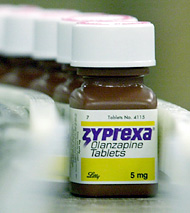
Earlier I posted about Eli Lilly withholding information from the public and physicians about some of the dangerous side effects of Zyprexa, an antipsychotic used for the treatment of schizophrenia and bipolar disorder. Today the New York Times reports that Eli Lilly has been promoting off label uses for Zyprexa:
Eli Lilly encouraged primary care physicians to use Zyprexa, a powerful drug for schizophrenia and bipolar disorder, in patients who did not have either condition, according to internal Lilly marketing materials.
The marketing documents, given to The New York Times by a lawyer representing mentally ill patients, detail a multiyear promotional campaign that Lilly began in Orlando, Fla., in late 2000. In the campaign, called Viva Zyprexa, Lilly told its sales representatives to suggest that doctors prescribe Zyprexa to older patients with symptoms of dementia.

Zyprexa is not approved to treat dementia or dementia-related psychosis, and in fact carries a prominent warning from the F.D.A. that it increases the risk of death in older patients with dementia-related psychosis. Federal laws bar drug makers from promoting prescription drugs for conditions for which they have not been approved — a practice known as off-label prescription — although doctors can prescribe drugs to any patient they wish.
Yet in 1999 and 2000 Lilly considered ways to convince primary care doctors that they should use Zyprexa on their patients. In one document, an unnamed Lilly marketing executive wrote that these doctors “do treat dementia” but “do not treat bipolar; schizophrenia is handled by psychiatrists.”
As a result, “dementia should be first message,” of a campaign to primary doctors, according to the document, which appears to be part of a larger marketing presentation but is not marked more specifically.

The issue of off-label marketing is controversial in the drug industry. Nearly every company is under either civil or criminal investigation for alleged efforts to expand the use of its drugs beyond the specific illness or condition for which they are approved.
At the 2001 meeting in Dallas with Zyprexa sales representatives, Mr. Bandick praised 16 representatives by name for the number of prescriptions they had convinced doctors to write, according to a script prepared in advance of the meeting. More than 100 other representatives had convinced doctors to write at least 16 extra prescriptions and thus “maxed out on a pretty sweet incentive,” he said.
“Olanzapine is the molecule that keeps on giving,” Mr. Bandick said.

Sunday, December 17, 2006

Polycystic Ovarian Syndrome, an introduction for psychiatrists


Polycystic ovarian syndrome (PCOS), also known as Stein-Leventhal syndrome, affects 6-10 % of women of reproductive age. Characteristic features of PCOS include menstrual cycle abnormalities and hyperandrogenism. Menstrual cycle abnormalities range from a decreased frequency of menses to complete amenorrhea, though some patients have normal menstrual cycles. Abnormal uterine bleeding can occur. Fertility is decreased. Manifestations of hyperandrogenism include acne, alopecia, and hirsutism. Recently hyperinsulinemia and insulin resistance have been recognized as features of PCOS (hyperandrogenism can lead to insulin resistance, and vice versa), and women with PCOS are at increased risk of type II diabetes mellitus. Obesity is common. The pathophysiology of PCOS is incompletely understood and the components of PCOS interact with each other in a complex manner. For example, obesity can lead to insulin resistance which can lead to hyperandrogenism.

Diagnosis of PCOS requires the exclusion of other causes of hyperandrogenism and anovulation/oligo-ovulation. Since pituitary or thyroid disease can cause ovulatory dysfunction, a prolactin level and TSH should be checked. Although the luteinizing hormone (LH)/ follicle stimulating hormone (FSH) ratio is usually greater than 2.5 to 3, a normal ratio does not exclude the diagnosis. A pregnancy test should also be checked. Androgen-producing neoplasms can be excluded by checking total testosterone and dehydroepiandrosterone sulfate (DHEAS) levels. Total testosterone levels are often mildly elevated in PCOS, but a level greater than 200 ng/dl suggests a virilizing neoplasm. 17-hydroxyprogesterone should be checked to screen for late-onset congenital adrenal hyperplasia. Sometimes a dexamethasone suppression test is performed to rule out Cushing’s syndrome. Non-obese patients should be screened for anorexia nervosa.

A transvaginal ultrasound is sometimes obtained in patients with PCOS; this test can identify most virilizing tumors. However, patients with PCOS do not always have radiographically demonstrated polycystic ovaries. In addition, approximately 25% of women with normal ovulation have polycystic-appearing ovaries.

Patients with PCOS are at increased risk for cardiovascular disease due to hyperandrogenism. Therefore fasting lipids should be checked. The patient should be assessed for other cardiac risk factors, such as smoking and hypertension. Due to the association between PCOS and insulin resistance, a fasting glucose level should be checked. Some also recommend checking insulin levels or glucose tolerance testing.

One of the primary treatments for PCOS is oral contraceptives, which suppress androgens. Sometimes spironolactone, which suppresses enzymes in the androgen biosynthetic pathway, is combined with oral contraceptives. Fertility can be increased by clomiphene citrate. Metformin, an insulin-sensitizing agent, has been shown to restore menstrual regularity. Weight loss is also helpful.

Several studies suggest that PCOS is more common in women with bipolar disorder or epilepsy than in the general population. Valproate probably increases the risk of PCOS. However, since the disorders that valproate is used to treat are also associated with PCOS, valproate has not been conclusively proven to be a causative factor for PCOS.

Psychiatrists should take a detailed menstrual history in female patients with bipolar disorder. It is also important to ask about hirsutism. Patients with baseline abnormalities should be referred to a primary care doctor for further evaluation. The development of PCOS symptoms during treatment also warrants referral to a primary care doctor. Symptoms of PCOS often remit or improve after the discontinuation of valproate. Prolactin-elevating antipsychotics can also cause menstrual abnormalities, and occasionally hirsutism.
--------------------------------------------------------------------
the above is for a psychiatry newsletter article I am writing

Saturday, December 16, 2006

Eli Lilly Minimizes Zyprexa Risk


The New York Times reports that Eli Lilly has been minimizing Zyprexa's risk for years:
Lilly’s own published data, which it told its sales representatives to play down in conversations with doctors, has shown that 30 percent of patients taking Zyprexa gain 22 pounds or more after a year on the drug, and some patients have reported gaining 100 pounds or more. But Lilly was concerned that Zyprexa’s sales would be hurt if the company was more forthright about the fact that the drug might cause unmanageable weight gain or diabetes, according to the documents, which cover the period 1995 to 2004.
Critics, including the American Diabetes Association, have argued that Zyprexa, introduced in 1996, is more likely to cause diabetes than other widely used schizophrenia drugs. Lilly has consistently denied such a link, and did so again on Friday in a written response to questions about the documents.
However, psychiatrists became well aware that Zyprexa was much more likely to cause weight gain, diabetes, and high cholesterol than other 2nd generation antipsychotics. So what did Eli Lilly do?
Lilly did expand its marketing to primary care physicians, who its internal studies showed were less aware of Zyprexa’s side effects. Lilly sales material encouraged representatives to promote Zyprexa as a “safe, gentle psychotropic” suitable for people with mild mental illness.
Eli Lilly repeatedly lied to or withheld information from doctors:
To reassure doctors, Lilly also publicly said that when it followed up with patients who had taken Zyprexa in a clinical trial for three years, it found that weight gain appeared to plateau after about nine months. But the company did not discuss a far less reassuring finding in early 1999, disclosed in the documents, that blood sugar levels in the patients increased steadily for three years.
In 2000 and 2001, more warning signs emerged, the documents show. In four surveys conducted by Lilly’s marketing department, the company found that 70 percent of psychiatrists polled had seen at least one of their patients develop high blood sugar or diabetes while taking Zyprexa, compared with about 20 percent for Risperdal or Seroquel. Lilly never disclosed those findings.

(Risperidone and Seroquel are antipsychotics that have a moderate risk of causing diabetes. The risk with these 2 drugs is less than that of Zyprexa, but greater than that of Abilify or Geodon)
I hope that Eli Lilly loses its lawsuits:
Last year, Lilly agreed to pay $750 million to settle suits by 8,000 people who claimed they developed diabetes or other medical problems after taking Zyprexa. Thousands more suits against the company are pending.
Because of the efforts of Eli Lilly, guidelines now force psychiatrists to monitor patients taking Geodon or Abilify for diabetes and other metabolic side effects. These drugs rarely cause metabolic side effects. All of the 2nd generation antipsychotics have been tarred with the FDA diabetes warning because Eli Lilly refused to own up to the problems with Zyprexa.

Thursday, December 14, 2006

Malpractice Immunity for Academic Physicians


Kevin MD linked to this article regarding immunity for physicians working for the state (in this case Ohio):
The Ohio Supreme Court issued its opinion this week in Theobald .v University of Cincinnati, granting blanket immunity from liability to physicians for their negligent acts when the medical malpractice occurs while the physician is teaching medical students or residents of a state medical school. It makes no difference whether the doctor is being paid privately or whether the doctor is acting outside of his official teaching capacity when the malpractice is committed. The bottom line is that the doctor may now be immune from suit and from accountability whenever a student is present during a medical procedure.
The lawyer writing this article just doesn't get it. In most states, full-time physician state employees are working for the state all the time, whether they are with students/residents or not. The usual university contract forbids full-time employees from practicing medicine except as part of their state employment. Billing is often done through a group practice plan (the university usually can't bill insurance companies directly). The income from this group practice plan is often controlled/distributed by the department chairman and is not the same as "being paid privately."
Here is how it works in Mississippi.
--------------------------
The actual court decision is interesting reading.

Thursday, November 30, 2006

Paxil linked to cardiac birth defects

WEDNESDAY, Nov. 29 (HealthDay News) -- A group representing America's obstetricians is recommending that women avoid the antidepressant Paxil if they are pregnant or planning on becoming pregnant, due to a potential heightened risk for birth defects.
The American College of Obstetricians and Gynecologists (ACOG) also cautioned that treatment with other antidepressants should be considered on a case-by-case basis.
ACOG's Committee on Obstetric Practice "recommends that treatment with all SSRIs [selective serotonin reuptake inhibitors] or selective norepinephrine reuptake inhibitors or both during pregnancy be individualized and paroxetine [Paxil] use among pregnant women or women planning to become pregnant be avoided, if possible," read the statement, which is in the December issue of Obstetrics & Gynecology.
The guidelines come a full year after the U.S. Food and Drug Administration (FDA) issued a warning about possible birth defects associated with Paxil when the drug is taken during the first trimester of pregnancy.
This warning was based on two studies. The first found about a 2 percent risk of heart defects in babies born to mothers who took Paxil early in their pregnancy, compared with a 1 percent risk in the general population.
The second study found that the risk of heart defects was 1.5 percent in babies whose mothers took Paxil in the first three months of pregnancy, compared with 1 percent in babies whose mothers took other antidepressants in the first trimester. The most common defects were cardiovascular.
"Since the FDA warnings a year ago, most ob/gyns have been trying to avoid Paxil during pregnancy," noted Dr. Jennifer Wu, an obstetrician/gynecologist at Lenox Hill Hospital in New York City. "This is just a formal statement by ACOG."
The initial FDA warning came in September of 2005. In December of the same year, the FDA instructed Paxil's maker, GlaxoSmithKline, to reclassify the drug from a Category C to D (a stronger warning) for pregnant women. Category D means studies in pregnant women have demonstrated a risk to the fetus.
Other reports had indicated that SSRIs, the category of antidepressants which includes Paxil as well as Celexa, Prozac and Zoloft, may cause newborns to have withdrawal symptoms.
ACOG acknowledged that these potential problems must be weighed against yet another study which found that pregnant women who discontinue their antidepressant medication are five times more likely to relapse into depression than women who continue with the medication.
"Untreated depression has its own risks, including low weight gain, alcohol and substance abuse, and sexually transmitted diseases, all of which have negative maternal and fetal health implications," the statement said.
Women of reproductive age have the highest prevalence of major depressive disorders, with ACOG experts estimating that about 1 in 10 will experience a bout of major or minor depression sometime during pregnancy or the postpartum period.
Ideally, these issues should be considered before a woman becomes pregnant, the ACOG panel said. But, given that about half of all pregnancies are not planned, many decisions regarding treatment will inevitably happen after the woman has conceived. Fetal echocardiography, which looks for heart trouble, should be considered for women who were exposed to Paxil in early pregnancy, the statement recommended.
"Women who have certain health problem such as depression really should try to plan their pregnancies with their ob/gyn and psychiatrist," Wu confirmed. "The major danger will be to women who have an unplanned pregnancy and don't realize it until they're two months along. There's a lot of organ development during that time, and exposure to certain SSRIs may pose some dangers."

Friday, November 24, 2006

That Wacky Kramer


The Reverend Jesse Jackson feels that Michael Richards needs psychiatric help:
First he went on national television to apologize for his racial tirade against two black hecklers. Now Michael Richards is taking his contriteness to the next level: he's hired a public relations expert with deep contacts in the black community.
New York publicist Howard Rubenstein took on Richards as a client Wednesday after being contacted by the actor-comedian. He then arranged for Richards to call the Revs. Jesse Jackson and Al Sharpton.

"Clearly he needs some race sensibility training, and some psychiatric help. His anger is volatile and dangerous to himself and others," Jackson said.