Wednesday, October 25, 2006

USA TODAY Raises Healthcare Costs


USA Today, after a week of articles promoting health care reform, published an article about missed heart attacks that will lead to more defensive medicine:
Over the past six years, studies in the New England Journal of Medicine and other journals have found a heart attack diagnosis is missed in 2% of heart attack patients seeking help in the USA's emergency rooms, 3% in Canada and 6% in the United Kingdom.
"It is the horns of the dilemma. On one hand, there are limitations to the diagnostic tools, and they are very real limitations," Ornato says. "The electrocardiogram is the first screening tool, and it's only going to pick up, on a good day, 70% to 75% of heart attacks."
He says new devices, including an experimental ECG that maps the heart and CT scanners that can look inside of clogged heart arteries, offer new hope for the future.
But he says patients and their advocates must sometimes push doctors who are not listening.
"If something doesn't feel right to them, they have the responsibility to express that," Ornato says. "It's the responsibility of the nurses and physicians to listen."

The rate of missed heart attack diagnoses is better in the US than in several countries with single-payer systems. The only way to improve the rate is admit practically everyone who comes to an ER with chest pain, thus raising costs dramatically. Some ER docs do this already, and I think more are going to do this as a result of the article. The article also promotes cardiac catheterization:
After Gustafson had the same battery of tests Pettry had taken and doctors found no evidence of a heart attack, they went a step further. They admitted him to the hospital and performed more tests, including a stress test, putting Gustafson on a treadmill and monitoring his heart as the 59-year-old social worker was pushed to his physical limits.
"They could find nothing obvious," Connie says. "The cardiologist on call was dismissive. She said there was nothing to support the diagnosis that he had any kind of heart event."
But Connie says her husband "could feel that something was not right."

As the staff prepared to discharge Gustafson, he saw Barry Crevey, a cardiologist he had met through his social work, in the hallway. Crevey listened to Gustafson's story and explained that 25% of heart attacks may be "silent."
Considering Gustafson's history and the fact that both his parents had cardiovascular disease, the doctor suggested his arteries should be checked by threading a heart catheter into them, injecting dye and measuring the openings.
"When he told me his story, I'm thinking, 'This person needs a heart catheterization,' " Crevey says. "This is Cardiology 101. I would not have even bothered to do a non-invasive stress test."

The arteries were cleared with stents and a drilling procedure, and Gustafson is now back at work with "a clean bill of health," Connie says.
Gradus-Pizlo (the patient's initial cardiologist during the hospitalization) says, "In a patient with known disease, there is no question there are blockages there," but none of the blockages were putting Gustafson's life at immediate risk.
His heart was working fine with the reduced blood flow, which was confirmed by the fact that he passed the stress test, she says. "Even with those blockages, he had adequate blood supply. I'm not saying he doesn't have disease. He has severe disease. I didn't recommend therapy. I recommended aggressive medical management based on guidelines."
Though she agrees the blockages should have been opened once they were seen, she does not believe she misdiagnosed Gustafson. "I believe it is a difference of approach," Gradus-Pizlo says. "This is a matter of clinical judgment."

For patients not having and acute coronary event, there is no evidence that angioplasty/stenting improves survival more than aggressive medical management (lowering cholesterol, aspirin, beta-blockers, etc). Cardiac catheterizations and angioplasty have serious risks. I think USA TODAY did a disservice to the cardiologist (Gradus-Pizlo) who was conservatively treating the patient.

1st vs 2nd Generation Antipsychotics

1st vs 2nd Generation Antipsychotics
Retired Doc recently compared 1st to 2nd Generation Antipsychotics.Here are my thoughts:My opinion on atypicals vs 1st generation antipsychotics is:
1. Clozaril has clearly superior efficacy, Zyprexa is moderately more effective, and the rest of the atypicals are marginally more effective than the 1st generation.
2. Although ALL antipsychotics(old and new) can cause weight gain and diabetes and hypercholesterolemia, the risk is clearly greater with zyprexa and clozaril.
3. Risperidone frequently causes hyperprolactinemia. This commonly causes sexual side effects, including breast enlargement in men. Whether this hyperprolactinemia causes osteoporosis in the long term is unknown.
4. Seroquel, Geodon, and Abilify are reasonable initial choices when an antipsychotic is indicated. Like all of the atypicals, the risk of tardive dyskinesia is lower than the 1st generation drugs. In my opinion, their side effect profile is better than zyprexa/risperidone.
5. Clozaril remains the drug of choice in treatment resistant patients, but because of the risk of agranulocytosis, should not be used initially.
(republished from several weeks ago with copyrighted cartoon deleted. Sorry, I didn't save the comments).

Wednesday, October 18, 2006

McCain Discusses Suicide


Arizona Sen. John McCain, a likely Republican presidential contender in 2008, joked on Wednesday he would "commit suicide" if Democrats win the Senate in November.
McCain, on a visit to Iowa to campaign for Republican congressional candidates, was asked his reaction to a potential Democratic takeover of the Senate in the November 7 elections.
"I think I'd just commit suicide," McCain told reporters, to accompanying laughter from Republicans standing with him. "I don't want to face that eventuality because I don't think it's going to happen."

boutique medicine

Marketwatch reports on Boutique Medicine:

Taylor was seeing as many as 35 patients a day but his business was struggling after a five-doctor practice he was part of disbanded. So he contracted with MDVIP, a company based in Boca Raton, Fla., that helps doctors transition to boutique practices.
"What convinced me to try it was I tried everything else," he said. Now he's winnowed his patient base to 425 from a high of nearly 4,000 and sees "anywhere from eight to 15 at the most on a very busy day."
Such a reduction often translates into longer and same-day appointments, extensive physicals, better coordination with specialists and more follow-up as well as a greater emphasis on preventive care. Taylor's staff of two, for example, is able to keep track of which patients taking cholesterol medications are due for blood work and call them.
"Patients are happier; I'm happier," he said. "I've got more time to devote to each problem a patient has. I feel much more comfortable and confident about what I do."

Physicians want to regain control of their schedules and are frustrated that they still have to spend so much time wrangling with insurance companies after years of pushing for systemic changes, he said.
Retainer practices also cater to some patients' desire to check out every health risk factor and has evolved as an alternative way to navigate the system, Caplan said.
"It's there because the current health-care system is broken and we actually have to pay people to talk to us," Caplan said. "You're buying back personalized medicine, a relationship with somebody, because the current business model has weeded that out."

"It's a tiny drop in a huge ocean," Plested said. "The economic reality and demographic reality is there aren't that many areas that will support this type of practice."
Still, retainer practices point to an uncomfortable truth, Caplan said. "It undermines one of our favorite myths, which is same quality of health care for all. That's never been true, but this rubs our nose in it as a society."

It's hard to practice high quality medicine in a primary setting. PCP's need to see too many patients in too short a time. Fortunately, in my specialty (sleep medicine), I am able to subsidize patient visits with income from sleep studies. The generous reimbursement for sleep studies allows me to spend more time with patients.

Friday, October 13, 2006

Pill Splitting


Should physicians encourage pill splitting as a way to help patients save money?

Splitting pills can help patients save money:
The first time that a patient asked me to write a prescription for a higher dosage of a medication was in the late 1990s. Viagra was a highly desired medication for some older male patients, but at $10 a pill, many couldn't afford that much of it. But these motivated patients soon learned that both the 50-mg and 100-mg tablets cost the same amount. Splitting the higher-dose pills effectively gave them a 50% discount.
Many of the world's best-selling drugs, including Lipitor, Zocor, and dozens of others, are priced similarly, with higher doses carrying the same price tag as lower doses. These medications are candidates for cost savings by splitting tablets.

However, pill splitting has its risks:
Splitting pills can be dangerous for certain types of patients and for certain medications. The difficulty is determining what medications can be safely split and for which patients.
Medications that have special enteric coatings, have extended-release formulations, or are capsules containing powder or gel are some examples of those that should never be split.
Another category of medicines that are dangerous for pill-splitting are those that have a narrow therapeutic index, where precise dosing is a critical element of the therapy. Even with pill- splitting devices, splitting the medicine can result in a plus or minus 20% variation in the effective dose.
Similarly, there are certain types of patients who are not good candidates for pill splitting, such as the elderly, patients suffering from dementia, and those with visual impairments or other conditions that would make it difficult for them to split a pill precisely.
So even if you had a medication that might appear to be safe to split, there are always going to be patients for whom the practice is going to be risky.

Another risk of pill splitting is confusion about the dose of medication. For example, a patient may have a bottle full of 40 mg blood pressure pills. If he goes to the ER with his bag of meds, the ER doc may think he is taking 40 mg daily of the medication rather than the 20 mg his primary care doc told him to take. I've seen this happen before in busy ER's and inpatient services.

Thursday, October 05, 2006

Foley is not a pedophile


Any suggestion that Mark Foley is a pedophile is false," the former congressman's lawyer, David Roth, said Tuesday at a news conference in West Palm Beach, Fla. He was right, but not for the reasons he probably had in mind. According to the American Psychiatric Association's Diagnostic and Statistical Manual of Mental Disorders, pedophilia involves "intense sexually arousing fantasies, sexual urges, or behaviors involving sexual activity with a prepubescent child or children (generally age 13 years or younger)." The disorder is one of a number of conditions known as paraphilias, which the APA defines as sexual obsessions or fixations "that generally involve non-human subjects, children, or other non-consenting adults, or the suffering or humiliation of oneself or one's partner." Examples of other well-known paraphilias include bestiality, necrophilia, exhibitionism, sadomasochism, and voyeurism. Some therapies that focus on changing cognitive and behavioral patterns are believed to help sufferers of paraphilias control themselves, if they are motivated to do so. But fully overcoming their predilections is a more difficult challenge.
Based on what has been revealed so far, former Rep. Foley seems to suffer from a different condition: ephebophilia, which is defined as a sexual attraction to post-pubescent adolescents and older teenagers. The DSM IV doesn't include ephebophilia as a diagnostic category. Sexual contact with children is explicitly illegal in all jurisdictions in the United States. But such contact between older teenagers and adults presents a murkier legal picture. The laws on age of consent vary from state to state, and prosecutors have wide latitude to determine whether to charge an individual with a sexual offense.
From Slate

Thursday, September 28, 2006

Sell Stocks Now


The Dow Jones Industrial Average reached its highest level in six years on Thursday afternoon but edged off the peak to finish just short of its all-time closing high. The S&P 500 hit a fresh a five-year high.
“The Dow is nothing but a flirt,” said Ken Tower, chief market strategist at Cybertrader. “It’s enjoying the attention and prolonging the mystery.”
The Dow will not reach another all-time closing high until at least 2009. We are currently in a long-term bear market. This rally will not last. Sell your index funds now. There is a 50% chance of a major ( greater than 15% drop in the Dow and S+P 500 indexes ) market crash in the next 45 days. If you are adventurous, buy Diamond and Spyder Put options.

Wednesday, September 13, 2006

Tort Reform Works

Medical Assurance Company of Mississippi
404 West Parkway Place
Ridgeland, Mississippi 39157
www.macm.net

FOR IMMEDIATE RELEASE
September 13, 2006

MACM Announces Premium Reduction for 2007

Medical Assurance Company of Mississippi (MACM) announced today that it will reduce its medical liability insurance rates across the board by 10 percent for 2007. This action was approved by MACM’s Board of Directors on September 6, 2006.

“We are very pleased to announce a rate reduction for our insureds for the second straight year,” Michael D. Houpt, President and Chief Executive Officer of MACM, said. “The favorable trends relative to losses and loss adjustment expenses that were evident in 2005 have continued through 2006; therefore our Board felt comfortable in making this decision.”

Numerous claims that were filed in late 2002 to avoid provisions in the tort reform packages passed by the Mississippi Legislature have been favorably resolved during this year. “We are finally disposing of large numbers of non-meritorious claims with little or no expense,” Houpt said. “Combined with the other positive effects of tort and judicial reform, our financial results to date indicate that another rate reduction is justified, and I trust that our insureds will be pleased.”

In September 2005, the Board of Directors reduced renewal rates for 2006 by 5 percent and in December 2005, granted a retroactive refund of up to 15 percent on 2005 premiums.

Mississippi leadership responded favorably to the news.

“This across the board reduction in medical liability rates by the largest insurer of doctors in Mississippi is a significant and welcome decision that will have an immediate positive impact,” Governor Haley Barbour said. “It is another concrete example of how tort reform is working to protect the quality and availability of health care by ending lawsuit abuse and leading to reduced medical liability rates in Mississippi. This is great news.”

Commissioner of Insurance George Dale said, “Mississippi continues to show insurance companies that recent reforms are working and do aid in providing and maintaining a fair and equitable marketplace. I commend MACM for establishing a financial position that allows for this second consecutive rate reduction. Reforms were needed and now benefits such as this reduction are the result.”

Founded in 1976, Medical Assurance Company of Mississippi is an organization of physicians and non-physician staff members dedicated to providing sound, stable insurance products and quality related services to physicians and other health care providers practicing in the state of Mississippi

Stanford Bans Drug Company Gifts to Doctors


Kevin MD links to an article about a new policy at Stanford:
Stanford University Medical Center will prohibit its physicians from accepting even small gifts like pens and mugs from pharmaceutical sales representatives under a new policy intended to limit industry influence on patient care and doctor education.
The policy would also apply to sales representatives from makers of medical devices and other companies, not just pharmaceutical companies. Company representatives would be barred from areas where patient treatment and doctor education occur, with some exceptions.
“We want to secure the public trust to value what happens in academic medicine,” Dr. Philip A. Pizzo, dean of the Stanford School of Medicine, said in an interview.
Stanford academic physicians will continue to be able to accept speaking fees (which can be up to $5000) for drug company dinners and CME seminars, but the residents won't get $1 pens. This really restores my trust in the Stanford University Medical Center Physicians.

Saturday, July 29, 2006

Nurses and Secretaries Demand Free Food


An article in the New York Times describes the common practice of drug reps providing free lunches for doctors' offices:
Free lunches occur regularly at doctors’ offices nationwide, where delivery people arrive with lunch for the whole office, ordered and paid for by drug makers to the tune of hundreds of millions of dollars a year.
Like the “free” vacation that comes with a time-share pitch attached, the lunches go down along with a pitch from pharmaceutical representatives hoping to bolster prescription sales. The cost of the lunches is ultimately factored in to drug company marketing expenses, working its way into the price of prescription drugs.

“We found that some offices get breakfast and lunch every day,” said Dr. Scott, who calls lunch the “currency” that buys access to doctors’ offices for drug representatives. He also noted that some doctors were hard pressed to meet payrolls and that the lunches provided an added benefit for their employees.
The deliveries often start even before lunchtime, with representatives bringing in pastries and large containers of coffee from Starbucks or Dunkin’ Donuts.
Ms. Slattery-Moschkau, the former pharmaceutical representative, said that nurses and staff members in some offices were quite demanding about lunch.
“It was almost a game, and it was unbelievable the animosity they would show if you did not bring the right kind of food, or if it was the third time they had pizza that week,”

I don't like to do drug company sponsored office lunches more than once a week, though not for any ethical reasons. I just prefer to go off by myself for a while and grab a sandwhich at Subway or McAlister's. The office lunches mainly benefit the office staff.

Friday, June 30, 2006

Superman Movie made by anti-Americans


Ever since artist Joe Shuster and writer Jerry Siegel created the granddaddy of all comic book icons in 1932, Superman has fought valiantly to preserve "truth, justice and the American way." Whether kicking Nazi ass on the radio in the '40s or wrapping himself in the Stars and Stripes on TV during the Cold War or even rescuing the White House's flag as his final feat in "Superman II," the Krypton-born, Smallville-raised Ubermensch always has been steeped in unmistakable U.S. symbolism.
But in the latest film incarnation, scribes Michael Dougherty and Dan Harris sought to downplay Superman's long-standing patriot act. With one brief line uttered by actor Frank Langella, the caped superhero's mission transformed from "truth, justice and the American way" to "truth, justice and all that stuff.""The world has changed. The world is a different place," Pennsylvania native Harris says. "The truth is he's an alien. He was sent from another planet. He has landed on the planet Earth, and he is here for everybody. He's an international superhero."
We were always hesitant to include the term 'American way'
Seems like a bad weekend to open the movie if the film-makers are ashamed of patriotism.

Friday, June 23, 2006

I'm Not One Of Those Fancy College-Educated Doctors

You want to know where I got my doctor's degree? At the Medical School of Hard Knocks, that's where. No matter what they say, advanced graduate studies won't teach you when somebody needs a shot of whiskey. Yale and Harvard don't tell you when to throw a bucket of water on a patient. And they can never teach you how to tell when someone just needs a good solid punch in the nose to bring them around.
I got my M.D. on the street. These people think they're suddenly a "doctor" because they memorized a lot of big words and took a bunch of formal tests. But there's plenty of things about being a doctor they'll never learn in their ivory-tower medical school.
For example, did you know that human intestines, if they spill out of the abdomen during surgery, can spool out all over the floor if you're not careful? You won't find that in a book, my friend.

Saturday, June 10, 2006

A Dangerous Obsession


An article in the Sunday New York Times Magazine describes the growing poker addiction problem among college students:
Online, Hogan would play 60 to 100 hands an hour — three times the number of his live games. There was no more shuffling between hands, no more 30-second gaps to chat with his friends or consider quitting. Each hand interlocked with the next. The effect was paralyzing, narcotic. "Internet poker induces a trancelike state," says Derevensky, the McGill professor, who once treated a 17-year-old Canadian boy who lost $30,000, much of it at PokerStars. "The player loses all track of time, where they are, what they're doing." When I spoke with an online hold-'em player from Florida who had lost a whopping $250,000 online, he told me: "It fried my brain. I would roll out of bed, go to my computer and stay there for 20 hours. One night after I went to sleep, my dad called. I woke up instantly, picked up the phone and said, 'I raise.' "
On-line poker is a dangerous and seductive mistress. I fight her allure (usually unsuccessfully) every night.

A Case of Plagiarism?


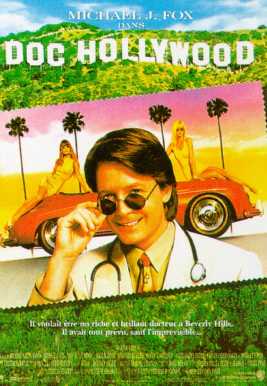
I took my son to see the movie "Cars" today. I was going to write a long post comparing the movie to "Doc Hollywood," but someone at Canada.com has already done so:
The makers of Doc Hollywood called. They want their movie back.
Cars rolls along like an animated, automotive version of that 1991 Michael J. Fox gem, from its basic plot points to its feel-good conclusion.
Stop us if you think you've heard this one before: A young hotshot on his way to Los Angeles causes a crash and gets stuck in a small town. Before he can leave, he must spend several days doing community service, only to find out that he likes the simple life there and that he's learned more about family and friendship than he'd ever imagined.
The main difference in Cars is that the characters are . . . well, they're cars, hence the title.

I was unable to find any attributation to the movie/book "Doc Hollywood" on the "Cars" website, or when I was watching the credits in the theatre. If Neil Shulman, MD didn't get a cut of the movie "Cars," he should sue.

Tuesday, May 16, 2006

Slate Comes Out in Favor of Tanning

From www.slate.com:
You can't stop tanning; the best you can do is help people control it. Toward that end, the industrialization of ultraviolet light is a blessing. It gives us the power to clarify, modulate, and customize dosage. Salons need oversight to make sure they help clients understand and manage this power. But if you shut them down or lock out teenagers, be prepared to enforce a dawn-to-dusk curfew or face an epidemic of skin cancer. If you liked back-alley abortions, you'll love backyard tanning.
For those of my readers in their teens and twenties, my advice to you is not to tan. If you do, you'll be sorry 5-10 years from now when you develop wrinkles. And there is always the risk of skin cancer.

Monday, May 15, 2006

Dogs and Ducks for Depression


I think that we're all aware of service animals for the physically disabled, especially the blind. But now patients with psychiatric disorders are claiming that their dogs are "emotional service dogs," often with dubious rationales:
"If you have backing of a medical professional and you can show a connection between a disabling condition and the keeping of an animal, I have 99.9 percent success," said Karen Copeland, a tenants' lawyer.
One of her current clients maintains that she needs an animal in her apartment because she is a recovering alcoholic and, apart from her pet, all her other friends are drinkers.

Even ducks are getting in on the act:
These days people rely on a veritable Noah's Ark of support animals. Tami McLallen, a spokeswoman for American Airlines, said that although dogs are the most common service animals taken onto planes, the airline has had to accommodate monkeys, miniature horses, cats and even an emotional support duck. "Its owner dressed it up in clothes," she recalled.
My opinion on the matter:
This isn't cute and is a total insult to the disabled community. They are ruining it for people who need it."

Thursday, May 11, 2006

Surgical Teamwork

The New York Times reports on a study of operating room communications:
"nurses often describe good collaboration as having their input respected, and physicians often describe good collaboration as having nurses who anticipate their needs and follow instructions."
There is a bit of a culture clash; nurses want respect, and surgeons want submissive, helpful nurses.

Monday, May 08, 2006

Dunlop Disease

A new epidemic is spreading across America:

A model's flesh squeezes out between her blue jeans and tank top in what is known as "Dunlop disease," as in her flab "dun lap" over her pants

Sunday, April 30, 2006

Hepatitis C


Hepatitis C is an increasingly common disease. Up to 90% of patients who have injected illicit drugs and between 7% and 10% of individuals who received blood or blood products prior to 1992 test positive for hepatitis C. Other risk factors include: 1) history of multiple sexual partners (though hepatitis C is much less readily transmittable sexually than the hepatitis B virus); 2) chronic hemodialysis treatment; 3) being the child of a hepatitis C positive woman; 4) tattoos or body piercings; and 5) needle stick accidents. Hepatitis C should also be suspected in anyone with unexplained elevated serum alanine aminotransferase (ALT) levels or signs of liver disease, such as jaundice or hepatomegaly.
Acute hepatitis C infection often does not come to clinical attention. Patients may experience nonspecific symptoms such as malaise, abdominal pain, and nausea. A few have jaundice. Acute hepatitis C infection progresses to chronic hepatitis C in approximately 75% of patients. It is chronic hepatitis C that is of chief concern to psychiatrists, especially those who work with chemically dependent populations.
The screening test for hepatitis C is the ELISA test for antibody to the hepatitis C virus (anti-HVC), which can sometimes give false-positive results. The confirmatory test is HCV RNA, which can distinguish between past and active infection. The recombinant immunoblot assay is no longer commonly used as a confirmatory test.
Patients with hepatitis C should be referred to an internist or GI specialist for further assessment, which in selected cases may include liver biopsy. Liver biopsy can be helpful in determining if the patient is likely to progress to cirrhosis, which occurs in about 20% of individuals with chronic hepatitis C, typically over a period of 20-40 years.

Treatment of hepatitis C is an evolving field. All patients with hepatitis C should be advised to abstain from alcohol, which accelerates the progression to cirrhosis and reduces the response to HCV treatments. Prime candidates for drug therapy include patients with persistently elevated ALT readings, detectable HCV RNA levels, and appropriate liver biopsy results [“liver biopsy results (if available) that show portal or bridging fibrosis or at least moderate inflammation or necrosis”]2. For those patients who are candidates for drug therapy, the current standard regime is weekly subcutaneous pegylated interferon alpha plus oral ribavarin for six to twelve months, depending on HCV genotype. The response rate is approximately 50% but varies depending on HCV genotype. Common side effects of ribavarin include hemolytic anemia, fatigue, irritability, and rash. Side effects of interferon include fatigue, flu-like syndrome, nausea, headaches, and depression. Suicidal ideation and suicide attempts have also been reported. Selective serotonin reuptake inhibitors have been used to treat interferon associated depression. If psychiatric side effects are severe, antiviral treatment may need to be discontinued.

REFERENCES
1. American College of Physicians. PIER (Physician’s Information and Education Resource) module for Hepatitis C. Available online at http://pier.acponline.org/physicians/diseases/d163/d163-pdf.html
2. Park JS, Dieterich DT. Chronic Hepatitis C: Latest Diagnosis and Treatment Guidelines. ConsultantLive.com 2006. Available online at http://consultantlive.com/article/showArticle.jhtml?articleID=184429289

Friday, April 28, 2006

Calculus

This newspaper article reminds me of my days of high school calculus:
The Onion
Calculus Problem Hits Too Close To Home
April 26, 2006
Issue 42•17
PULLMAN, WA–The analysis of formulae derived from the fundamental theorem of calculus had a profound and seemingly personal impact on Washington State University freshman Barry Feldman on Monday, teaching assistants in Feldman's differential calculus section reported. "There was something about having to consider multiple rates of change and their effect on one another that really struck a nerve with Barry. I've never seen a student flinch so violently at terms like 'increasingly negative curves' or 'derivatives,'" TA Melanie Peppers said. "As uneasy as the unresolved equation seemed to make Barry feel, the prospect of eventually arriving at a solution for it actually appeared to upset him more." Feldman was recently the subject of gossip among the faculty after he interrupted a lecture on increasing-tensor calculus by screaming that "enough is enough" and asking if the professor would "please just change the subject."