Sunday, November 19, 2006

Sleep deprivation and driving


Sleep Review reports:
A recent online article from ABC News reports that Stanford University researchers have found that staying awake for 24 hours has the same effect as being legally drunk. Clearly, sleep deprivation can be pretty strong stuff. We know it leads to mood swings, confusion, impaired motor coordination and more. But can going without sleep for 24-hours make you, say, slur your speech and wear a lampshade on your head? Steven Howard, associate professor of anesthesia and an expert on sleep deprivation and fatigue teamed up with colleagues to study 24 nurses and 25 doctors who worked the 12-hour graveyard shift at Stanford Hospital. Half were given a 40-minute nap break at 3am, in the middle of their shift, and the other half worked straight through. At the end of their shifts, study participants took a variety of tests including a simulated 40-minute drive. Those who had not napped—but were instead sleep-deprived—turned out to be dangerous drivers. According to the researchers, the non-nappers crashed “over and over again.” The nappers did much better when it came to memory, dexterity, and mood as well. They outranked the non-nappers on a written memory test and a simulated insertion of an intravenous tube. Both groups even took a test designed by NASA that measured different mood states like confusion, fatigue, anger, and vigor. On the test, the nappers showed fewer performance lapses, less fatigue, and more vigor.
Both sleep deprivation and alcohol intoxication make driving more dangerous. Combining the two is especially dangerous.

Pre-Traumatic Stress Disorder

NORFOLK, VA—Pre-traumatic stress disorder, a future-combat-related psychological condition previously thought to afflict only young soldiers drafted against their will, is now found in growing numbers among National Guard members, Army, Navy, Marine, and Air Force reservists, semi-retired officers, and the newly recruited, according to a government study released Monday.
"When soldiers are put in the extreme situation of facing the possibility of large-scale death and shocking violence, many experience sleeplessness and outbursts of anger," said Walter Reed Army Hospital psychologist Capt. Sidney Mullenthauer. "We're seeing more victims experience vivid, ultra-realistic flash-forwards of roadside bombings that tear through a group of innocent children, or rocket attacks on their convoys that leave fellow soldiers charred and smoldering."
The study, conducted by the Department Of Future Veterans Affairs, found that 80 percent of part-time soldiers reported no signs of Pre-TSD while carrying out their obligatory one weekend of duty a month, but quickly developed severe symptoms upon receiving orders for active combat.
In addition, a significant number of those who will enter a war zone say they are plagued by repeated visions of atrocities, torture, and the CNN logo.

Tuesday, November 14, 2006

Risperidone approved for autism


The Food and Drug Administration has approved risperidone for treatment of irritability associated with autism. This approval addresses aggression, deliberate self-injury, and temper tantrums in children aged 5 years and older, and in adolescents.
In an interview, Dr. Christopher J. McDougle characterized the FDA approval as a major development. “There is no drug currently approved for autism, so it's a tremendous breakthrough,” said Dr. McDougle, the Albert E. Stern Professor and chairman of the department of psychiatry at Indiana University, Indianapolis.
The new indication is based in part on a multicenter, randomized, double-blind study that showed significant behavioral improvements among 49 children treated with risperidone, compared with 52 given a placebo (N. Engl. J. Med. 2002;347:314–21). Researchers assessed response using the Irritability Subscale of the Aberrant Behavior Checklist and the rating on the Clinical Global Impressions-Improvement Scale. There were 33 responders in the risperidone group and 6 responders in the placebo group.
In an open-label, 8-week follow-up study, the 46 nonresponders to placebo were given risperidone, and 30 responded. Researchers then monitored all responders and demonstrated that the benefit of treatment persisted for these patients out to 6 months (Am. J. Psychyiatry 2005;162:1361–9). The authors added, however, that discontinuation after 6 months “was associated with a rapid return of disruptive and aggressive behavior in most subjects.”
These studies were sponsored by the National Institute of Mental Health. The benefit of treatment persisted out to 6 months in the 63 of the children who had a positive response at 8 weeks.
Dr. McDougle emphasized that the approval is not for treatment of autism across the board. “It's important for people to realize the drug is approved for associated symptoms—not the core social and communication symptoms,” he said.
The percentage of pediatric patients with autism who display aggression, deliberate self-injury, and/or temper tantrums is probably in the range of 20%–30%, Dr. Scahill said. He characterized that range as sizable.

-----------------------------------------
I have several adult patients with autism, and have found risperidone effective for treating their hyperactivity and self-injurious behavior.

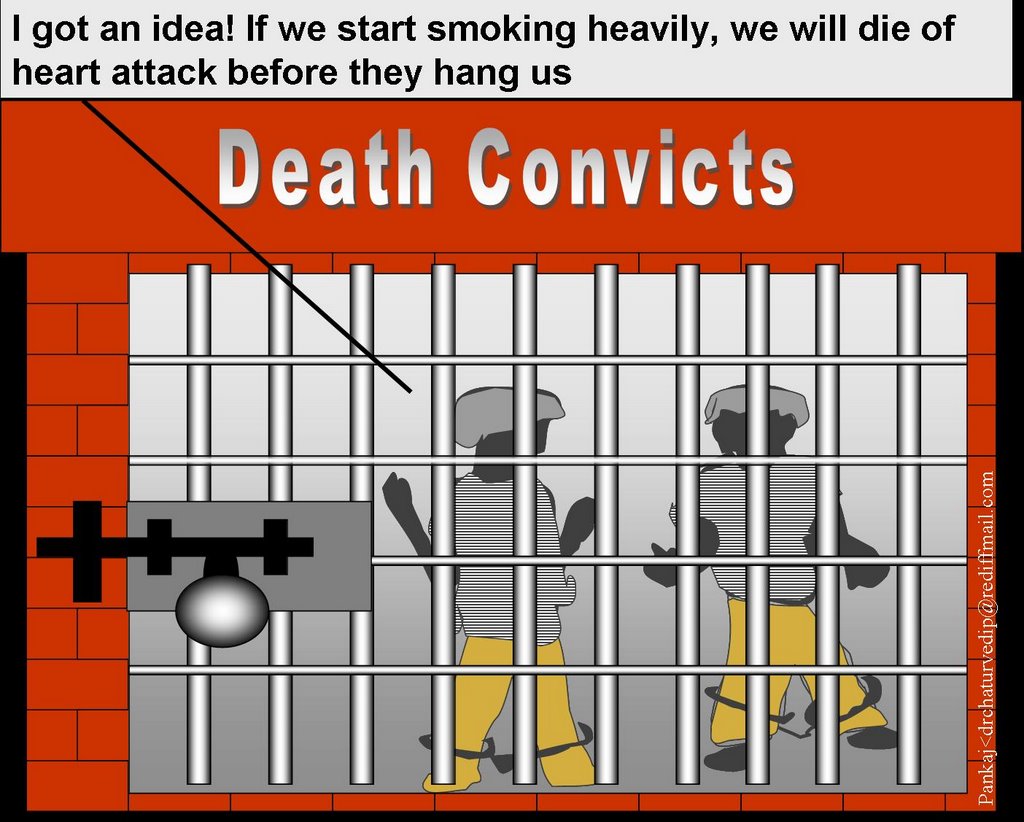
Doctors are like Convicts


"They make you feel like a convict" is what doctors say about the people, commissions, agencies and departments we must answer to, every month, for the rest of our lives, or be stripped of the right to practice medicine (as well as the ability to earn a living). Every doctor lives under continuous scrutiny from federal, state, hospital, insurance company, specialty board, medico-legal, and professional conduct organizations. Hundreds of pages of forms must be filled out, hundreds of thousands of dollars spent, hundreds of hours of study and examination must be completed every year — just to stay in practice — and that's after Board Certification, a process at then end of ten years of intense training, study, work and examination.
Each of these burdens is placed on the doctor in the name of "protecting the public", but everyone in the medical business knows the plain truth: that not one of these actually helps us treat patients, not one makes us better doctors. You become a better doctor when you notice patterns, when you get out of your own way enough to hear real complaints and treat them. You might scrub in with a friend who does a new procedure, go to an interesting course (the good ones often don't give CME — mandated continuing medical education — credits) or you might become a better doctor in your room at night with your old books that you see in a new light because you've seen a certain case that day. Every doctor knows this: however it happens, professional growth does not take place via "administrative compliance." The public is not protected at all by these things. What they do protect is the livelihood of an entire class — the millions who make their livings in the public and private "administration" of American medicine. Do I want to feed my little girl to this beast? I don't think so.

Friday, November 10, 2006

Democrats hate Mississippi


A Mississippi congressman says Rep. Charles Rangel of New York owes the southern state an apology, and he asks if insults are what Mississippi should expect when Democrats take over leadership in Congress.
Rangel, a Democrat, was quoted in The New York Times on Thursday saying: "Mississippi gets more than their fair share back in federal money, but who the hell wants to live in Mississippi?"
Rangel said he didn't intend to insult the state, but Rep. Chip Pickering, R-Miss., issued a sharp statement criticizing the choice of words.
"I hope his remarks are not the kind of insults, slander and defamation that Mississippians will come to expect from the Democrat leadership in Washington, D.C.," Pickering said.

via Drudge
the image is from this website.

Thursday, November 09, 2006

Gov gives with one hand and takes away with the other

On November 1, the Centers for Medicare and Medicaid Services (CMS) issued its final rule for the 2007 Physician Fee Schedule. The rule increases Medicare relative value units (RVUs) for office visits and other undervalued evaluation and management (E/M) services. The RVUs are one of the factors that Medicare and many other payers use in setting their pay rates. The RVU increases will result in Medicare paying approximately $4 billion more for E/M services than it has in the past. CMS’s decision to increase the RVUs was due in large part to the College’s efforts, supported by other physician organizations, to document that the typical complexity and work involved in these services has increased substantially.
Regrettably, though, the initial beneficial impact for patients that result from paying more for personalized, primary care services will be undermined because of Congress’ inexcusable failure to act to avert a 5 percent cut mandated by the flawed sustainable growth rate (SGR) formula. In fact, CMS now projects that the SGR cut will more than cancel out the 2007 dollar improvements internists would have received from the RVU increases.
The 5 percent payment cut results from the SGR formula, which was created in 1997 and ties physician payment to growth in the overall economy. When growth in physician expenditures exceeds growth in the economy, the difference is subtracted from physician payments. This results in an across-the-board cut in Medicare payments to physicians.
The College agrees with CMS that by paying physicians more for the time they spend talking with patients about their health care and by emphasizing personalized care, patients will benefit from better outcomes and more efficient use of resources. The College also believes that the improved RVUs, if not offset by the Medicare SGR cut , would begin to address long-standing inequities in how Medicare pays for services that are contributing to the imminent collapse of primary care medicine in the United States.
One result of the SGR cut is that many internists, who are already struggling to keep their practices open, will find that Medicare payments will continue to fall behind their costs. A new 2006 randomized survey of ACP’s membership found that if a 5 percent cut goes into effect, 27.6 percent of those surveyed will decrease the number of new Medicare patients accepted into their practices; almost 40 percent of those who are self-employed or in private practice reported that they would decrease the number of new Medicare patients they would accept . Other specialties will experience even larger reductions in Medicare payments, which will also lead to reduced beneficiary access.
It is not too late, however, for Congress to act to avert the SGR cut and assure that internists and your Medicare patients get the full benefit of the RVU increases for E/M services.
Congress will be returning in a matter of days for a post-election “lame duck” session to complete action on “must pass” legislation before adjourning for the year. We need your help to assure that legislation to halt the SGR cuts is among those “must pass” bills.
We ask you to help us prevail upon each and every member, including those in the congressional leadership and on Medicare authorizing committees, to enact legislation to:
Halt the 5 percent cut in Medicare payments that will result from a flawed SGR formula and replace it with a positive update, and
Support implementation, without delay, of CMS’s final rule to increase Medicare relative value units (RVUs) for office visits and other undervalued evaluation and management (E/M) services.
Each and every member of Congress is critical – we need your help today. Time is of the essence as Congress will reconvene this coming Monday, November 13 and may only remain in session for a few days. Please take a few minutes and use ACP’s Legislative Action Center (LAC) to contact your members of Congress,
http://www.acponline.org/lac . [To logon, use your email address as the username and ACP as the password, unless you’ve personalized it.] A sample message is available for you to personalize and forward to your federal lawmakers. Different messages are posted for medical students, associate members, and internists. Even better, please take a few minutes to call your members of Congress in their Washington offices. Use AMA’s toll-free grassroots hotline at 1-800-833-6354 and press 1, then enter your zip code and ask for the member’s health legislative aide. If you have problems, please contact Tracy Novak at tnovak@acponline.org or by phone at 800-338-2746 ext. 4532.
Many thanks to those of you who contacted your legislators previously this year but I urge you to contact them again now. Many of you were told by your lawmakers that they would fix the SGR problem after the elections – we must hold them to that promise. Without immediate Congressional action, primary care will suffer and the intended improvements for patients that would result from emphasizing the value of personalized, primary care will not be realized. We work too hard to provide the best care possible to our patients – we can’t let Congressional inaction change the paradigm. Thank you in advance for your help.
Lynne Kirk, MD, FACPPresident, ACP

Wednesday, October 25, 2006

USA TODAY Raises Healthcare Costs


USA Today, after a week of articles promoting health care reform, published an article about missed heart attacks that will lead to more defensive medicine:
Over the past six years, studies in the New England Journal of Medicine and other journals have found a heart attack diagnosis is missed in 2% of heart attack patients seeking help in the USA's emergency rooms, 3% in Canada and 6% in the United Kingdom.
"It is the horns of the dilemma. On one hand, there are limitations to the diagnostic tools, and they are very real limitations," Ornato says. "The electrocardiogram is the first screening tool, and it's only going to pick up, on a good day, 70% to 75% of heart attacks."
He says new devices, including an experimental ECG that maps the heart and CT scanners that can look inside of clogged heart arteries, offer new hope for the future.
But he says patients and their advocates must sometimes push doctors who are not listening.
"If something doesn't feel right to them, they have the responsibility to express that," Ornato says. "It's the responsibility of the nurses and physicians to listen."

The rate of missed heart attack diagnoses is better in the US than in several countries with single-payer systems. The only way to improve the rate is admit practically everyone who comes to an ER with chest pain, thus raising costs dramatically. Some ER docs do this already, and I think more are going to do this as a result of the article. The article also promotes cardiac catheterization:
After Gustafson had the same battery of tests Pettry had taken and doctors found no evidence of a heart attack, they went a step further. They admitted him to the hospital and performed more tests, including a stress test, putting Gustafson on a treadmill and monitoring his heart as the 59-year-old social worker was pushed to his physical limits.
"They could find nothing obvious," Connie says. "The cardiologist on call was dismissive. She said there was nothing to support the diagnosis that he had any kind of heart event."
But Connie says her husband "could feel that something was not right."

As the staff prepared to discharge Gustafson, he saw Barry Crevey, a cardiologist he had met through his social work, in the hallway. Crevey listened to Gustafson's story and explained that 25% of heart attacks may be "silent."
Considering Gustafson's history and the fact that both his parents had cardiovascular disease, the doctor suggested his arteries should be checked by threading a heart catheter into them, injecting dye and measuring the openings.
"When he told me his story, I'm thinking, 'This person needs a heart catheterization,' " Crevey says. "This is Cardiology 101. I would not have even bothered to do a non-invasive stress test."

The arteries were cleared with stents and a drilling procedure, and Gustafson is now back at work with "a clean bill of health," Connie says.
Gradus-Pizlo (the patient's initial cardiologist during the hospitalization) says, "In a patient with known disease, there is no question there are blockages there," but none of the blockages were putting Gustafson's life at immediate risk.
His heart was working fine with the reduced blood flow, which was confirmed by the fact that he passed the stress test, she says. "Even with those blockages, he had adequate blood supply. I'm not saying he doesn't have disease. He has severe disease. I didn't recommend therapy. I recommended aggressive medical management based on guidelines."
Though she agrees the blockages should have been opened once they were seen, she does not believe she misdiagnosed Gustafson. "I believe it is a difference of approach," Gradus-Pizlo says. "This is a matter of clinical judgment."

For patients not having and acute coronary event, there is no evidence that angioplasty/stenting improves survival more than aggressive medical management (lowering cholesterol, aspirin, beta-blockers, etc). Cardiac catheterizations and angioplasty have serious risks. I think USA TODAY did a disservice to the cardiologist (Gradus-Pizlo) who was conservatively treating the patient.

1st vs 2nd Generation Antipsychotics

1st vs 2nd Generation Antipsychotics
Retired Doc recently compared 1st to 2nd Generation Antipsychotics.Here are my thoughts:My opinion on atypicals vs 1st generation antipsychotics is:
1. Clozaril has clearly superior efficacy, Zyprexa is moderately more effective, and the rest of the atypicals are marginally more effective than the 1st generation.
2. Although ALL antipsychotics(old and new) can cause weight gain and diabetes and hypercholesterolemia, the risk is clearly greater with zyprexa and clozaril.
3. Risperidone frequently causes hyperprolactinemia. This commonly causes sexual side effects, including breast enlargement in men. Whether this hyperprolactinemia causes osteoporosis in the long term is unknown.
4. Seroquel, Geodon, and Abilify are reasonable initial choices when an antipsychotic is indicated. Like all of the atypicals, the risk of tardive dyskinesia is lower than the 1st generation drugs. In my opinion, their side effect profile is better than zyprexa/risperidone.
5. Clozaril remains the drug of choice in treatment resistant patients, but because of the risk of agranulocytosis, should not be used initially.
(republished from several weeks ago with copyrighted cartoon deleted. Sorry, I didn't save the comments).

Wednesday, October 18, 2006

McCain Discusses Suicide


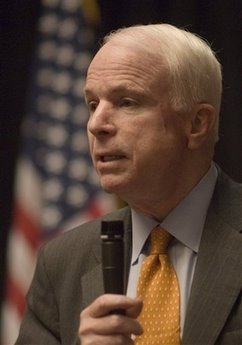
Arizona Sen. John McCain, a likely Republican presidential contender in 2008, joked on Wednesday he would "commit suicide" if Democrats win the Senate in November.
McCain, on a visit to Iowa to campaign for Republican congressional candidates, was asked his reaction to a potential Democratic takeover of the Senate in the November 7 elections.
"I think I'd just commit suicide," McCain told reporters, to accompanying laughter from Republicans standing with him. "I don't want to face that eventuality because I don't think it's going to happen."

boutique medicine

Marketwatch reports on Boutique Medicine:

Taylor was seeing as many as 35 patients a day but his business was struggling after a five-doctor practice he was part of disbanded. So he contracted with MDVIP, a company based in Boca Raton, Fla., that helps doctors transition to boutique practices.
"What convinced me to try it was I tried everything else," he said. Now he's winnowed his patient base to 425 from a high of nearly 4,000 and sees "anywhere from eight to 15 at the most on a very busy day."
Such a reduction often translates into longer and same-day appointments, extensive physicals, better coordination with specialists and more follow-up as well as a greater emphasis on preventive care. Taylor's staff of two, for example, is able to keep track of which patients taking cholesterol medications are due for blood work and call them.
"Patients are happier; I'm happier," he said. "I've got more time to devote to each problem a patient has. I feel much more comfortable and confident about what I do."

Physicians want to regain control of their schedules and are frustrated that they still have to spend so much time wrangling with insurance companies after years of pushing for systemic changes, he said.
Retainer practices also cater to some patients' desire to check out every health risk factor and has evolved as an alternative way to navigate the system, Caplan said.
"It's there because the current health-care system is broken and we actually have to pay people to talk to us," Caplan said. "You're buying back personalized medicine, a relationship with somebody, because the current business model has weeded that out."

"It's a tiny drop in a huge ocean," Plested said. "The economic reality and demographic reality is there aren't that many areas that will support this type of practice."
Still, retainer practices point to an uncomfortable truth, Caplan said. "It undermines one of our favorite myths, which is same quality of health care for all. That's never been true, but this rubs our nose in it as a society."

It's hard to practice high quality medicine in a primary setting. PCP's need to see too many patients in too short a time. Fortunately, in my specialty (sleep medicine), I am able to subsidize patient visits with income from sleep studies. The generous reimbursement for sleep studies allows me to spend more time with patients.

Friday, October 13, 2006

Pill Splitting


Should physicians encourage pill splitting as a way to help patients save money?

Splitting pills can help patients save money:
The first time that a patient asked me to write a prescription for a higher dosage of a medication was in the late 1990s. Viagra was a highly desired medication for some older male patients, but at $10 a pill, many couldn't afford that much of it. But these motivated patients soon learned that both the 50-mg and 100-mg tablets cost the same amount. Splitting the higher-dose pills effectively gave them a 50% discount.
Many of the world's best-selling drugs, including Lipitor, Zocor, and dozens of others, are priced similarly, with higher doses carrying the same price tag as lower doses. These medications are candidates for cost savings by splitting tablets.

However, pill splitting has its risks:
Splitting pills can be dangerous for certain types of patients and for certain medications. The difficulty is determining what medications can be safely split and for which patients.
Medications that have special enteric coatings, have extended-release formulations, or are capsules containing powder or gel are some examples of those that should never be split.
Another category of medicines that are dangerous for pill-splitting are those that have a narrow therapeutic index, where precise dosing is a critical element of the therapy. Even with pill- splitting devices, splitting the medicine can result in a plus or minus 20% variation in the effective dose.
Similarly, there are certain types of patients who are not good candidates for pill splitting, such as the elderly, patients suffering from dementia, and those with visual impairments or other conditions that would make it difficult for them to split a pill precisely.
So even if you had a medication that might appear to be safe to split, there are always going to be patients for whom the practice is going to be risky.

Another risk of pill splitting is confusion about the dose of medication. For example, a patient may have a bottle full of 40 mg blood pressure pills. If he goes to the ER with his bag of meds, the ER doc may think he is taking 40 mg daily of the medication rather than the 20 mg his primary care doc told him to take. I've seen this happen before in busy ER's and inpatient services.

Thursday, October 05, 2006

Foley is not a pedophile


Any suggestion that Mark Foley is a pedophile is false," the former congressman's lawyer, David Roth, said Tuesday at a news conference in West Palm Beach, Fla. He was right, but not for the reasons he probably had in mind. According to the American Psychiatric Association's Diagnostic and Statistical Manual of Mental Disorders, pedophilia involves "intense sexually arousing fantasies, sexual urges, or behaviors involving sexual activity with a prepubescent child or children (generally age 13 years or younger)." The disorder is one of a number of conditions known as paraphilias, which the APA defines as sexual obsessions or fixations "that generally involve non-human subjects, children, or other non-consenting adults, or the suffering or humiliation of oneself or one's partner." Examples of other well-known paraphilias include bestiality, necrophilia, exhibitionism, sadomasochism, and voyeurism. Some therapies that focus on changing cognitive and behavioral patterns are believed to help sufferers of paraphilias control themselves, if they are motivated to do so. But fully overcoming their predilections is a more difficult challenge.
Based on what has been revealed so far, former Rep. Foley seems to suffer from a different condition: ephebophilia, which is defined as a sexual attraction to post-pubescent adolescents and older teenagers. The DSM IV doesn't include ephebophilia as a diagnostic category. Sexual contact with children is explicitly illegal in all jurisdictions in the United States. But such contact between older teenagers and adults presents a murkier legal picture. The laws on age of consent vary from state to state, and prosecutors have wide latitude to determine whether to charge an individual with a sexual offense.
From Slate

Thursday, September 28, 2006

Sell Stocks Now


The Dow Jones Industrial Average reached its highest level in six years on Thursday afternoon but edged off the peak to finish just short of its all-time closing high. The S&P 500 hit a fresh a five-year high.
“The Dow is nothing but a flirt,” said Ken Tower, chief market strategist at Cybertrader. “It’s enjoying the attention and prolonging the mystery.”
The Dow will not reach another all-time closing high until at least 2009. We are currently in a long-term bear market. This rally will not last. Sell your index funds now. There is a 50% chance of a major ( greater than 15% drop in the Dow and S+P 500 indexes ) market crash in the next 45 days. If you are adventurous, buy Diamond and Spyder Put options.

Wednesday, September 13, 2006

Tort Reform Works

Medical Assurance Company of Mississippi
404 West Parkway Place
Ridgeland, Mississippi 39157
www.macm.net

FOR IMMEDIATE RELEASE
September 13, 2006

MACM Announces Premium Reduction for 2007

Medical Assurance Company of Mississippi (MACM) announced today that it will reduce its medical liability insurance rates across the board by 10 percent for 2007. This action was approved by MACM’s Board of Directors on September 6, 2006.

“We are very pleased to announce a rate reduction for our insureds for the second straight year,” Michael D. Houpt, President and Chief Executive Officer of MACM, said. “The favorable trends relative to losses and loss adjustment expenses that were evident in 2005 have continued through 2006; therefore our Board felt comfortable in making this decision.”

Numerous claims that were filed in late 2002 to avoid provisions in the tort reform packages passed by the Mississippi Legislature have been favorably resolved during this year. “We are finally disposing of large numbers of non-meritorious claims with little or no expense,” Houpt said. “Combined with the other positive effects of tort and judicial reform, our financial results to date indicate that another rate reduction is justified, and I trust that our insureds will be pleased.”

In September 2005, the Board of Directors reduced renewal rates for 2006 by 5 percent and in December 2005, granted a retroactive refund of up to 15 percent on 2005 premiums.

Mississippi leadership responded favorably to the news.

“This across the board reduction in medical liability rates by the largest insurer of doctors in Mississippi is a significant and welcome decision that will have an immediate positive impact,” Governor Haley Barbour said. “It is another concrete example of how tort reform is working to protect the quality and availability of health care by ending lawsuit abuse and leading to reduced medical liability rates in Mississippi. This is great news.”

Commissioner of Insurance George Dale said, “Mississippi continues to show insurance companies that recent reforms are working and do aid in providing and maintaining a fair and equitable marketplace. I commend MACM for establishing a financial position that allows for this second consecutive rate reduction. Reforms were needed and now benefits such as this reduction are the result.”

Founded in 1976, Medical Assurance Company of Mississippi is an organization of physicians and non-physician staff members dedicated to providing sound, stable insurance products and quality related services to physicians and other health care providers practicing in the state of Mississippi

Stanford Bans Drug Company Gifts to Doctors


Kevin MD links to an article about a new policy at Stanford:
Stanford University Medical Center will prohibit its physicians from accepting even small gifts like pens and mugs from pharmaceutical sales representatives under a new policy intended to limit industry influence on patient care and doctor education.
The policy would also apply to sales representatives from makers of medical devices and other companies, not just pharmaceutical companies. Company representatives would be barred from areas where patient treatment and doctor education occur, with some exceptions.
“We want to secure the public trust to value what happens in academic medicine,” Dr. Philip A. Pizzo, dean of the Stanford School of Medicine, said in an interview.
Stanford academic physicians will continue to be able to accept speaking fees (which can be up to $5000) for drug company dinners and CME seminars, but the residents won't get $1 pens. This really restores my trust in the Stanford University Medical Center Physicians.

Saturday, July 29, 2006

Nurses and Secretaries Demand Free Food


An article in the New York Times describes the common practice of drug reps providing free lunches for doctors' offices:
Free lunches occur regularly at doctors’ offices nationwide, where delivery people arrive with lunch for the whole office, ordered and paid for by drug makers to the tune of hundreds of millions of dollars a year.
Like the “free” vacation that comes with a time-share pitch attached, the lunches go down along with a pitch from pharmaceutical representatives hoping to bolster prescription sales. The cost of the lunches is ultimately factored in to drug company marketing expenses, working its way into the price of prescription drugs.

“We found that some offices get breakfast and lunch every day,” said Dr. Scott, who calls lunch the “currency” that buys access to doctors’ offices for drug representatives. He also noted that some doctors were hard pressed to meet payrolls and that the lunches provided an added benefit for their employees.
The deliveries often start even before lunchtime, with representatives bringing in pastries and large containers of coffee from Starbucks or Dunkin’ Donuts.
Ms. Slattery-Moschkau, the former pharmaceutical representative, said that nurses and staff members in some offices were quite demanding about lunch.
“It was almost a game, and it was unbelievable the animosity they would show if you did not bring the right kind of food, or if it was the third time they had pizza that week,”

I don't like to do drug company sponsored office lunches more than once a week, though not for any ethical reasons. I just prefer to go off by myself for a while and grab a sandwhich at Subway or McAlister's. The office lunches mainly benefit the office staff.

Friday, June 30, 2006

Superman Movie made by anti-Americans


Ever since artist Joe Shuster and writer Jerry Siegel created the granddaddy of all comic book icons in 1932, Superman has fought valiantly to preserve "truth, justice and the American way." Whether kicking Nazi ass on the radio in the '40s or wrapping himself in the Stars and Stripes on TV during the Cold War or even rescuing the White House's flag as his final feat in "Superman II," the Krypton-born, Smallville-raised Ubermensch always has been steeped in unmistakable U.S. symbolism.
But in the latest film incarnation, scribes Michael Dougherty and Dan Harris sought to downplay Superman's long-standing patriot act. With one brief line uttered by actor Frank Langella, the caped superhero's mission transformed from "truth, justice and the American way" to "truth, justice and all that stuff.""The world has changed. The world is a different place," Pennsylvania native Harris says. "The truth is he's an alien. He was sent from another planet. He has landed on the planet Earth, and he is here for everybody. He's an international superhero."
We were always hesitant to include the term 'American way'
Seems like a bad weekend to open the movie if the film-makers are ashamed of patriotism.

Friday, June 23, 2006

I'm Not One Of Those Fancy College-Educated Doctors

You want to know where I got my doctor's degree? At the Medical School of Hard Knocks, that's where. No matter what they say, advanced graduate studies won't teach you when somebody needs a shot of whiskey. Yale and Harvard don't tell you when to throw a bucket of water on a patient. And they can never teach you how to tell when someone just needs a good solid punch in the nose to bring them around.
I got my M.D. on the street. These people think they're suddenly a "doctor" because they memorized a lot of big words and took a bunch of formal tests. But there's plenty of things about being a doctor they'll never learn in their ivory-tower medical school.
For example, did you know that human intestines, if they spill out of the abdomen during surgery, can spool out all over the floor if you're not careful? You won't find that in a book, my friend.

Saturday, June 10, 2006

A Dangerous Obsession


An article in the Sunday New York Times Magazine describes the growing poker addiction problem among college students:
Online, Hogan would play 60 to 100 hands an hour — three times the number of his live games. There was no more shuffling between hands, no more 30-second gaps to chat with his friends or consider quitting. Each hand interlocked with the next. The effect was paralyzing, narcotic. "Internet poker induces a trancelike state," says Derevensky, the McGill professor, who once treated a 17-year-old Canadian boy who lost $30,000, much of it at PokerStars. "The player loses all track of time, where they are, what they're doing." When I spoke with an online hold-'em player from Florida who had lost a whopping $250,000 online, he told me: "It fried my brain. I would roll out of bed, go to my computer and stay there for 20 hours. One night after I went to sleep, my dad called. I woke up instantly, picked up the phone and said, 'I raise.' "
On-line poker is a dangerous and seductive mistress. I fight her allure (usually unsuccessfully) every night.

A Case of Plagiarism?


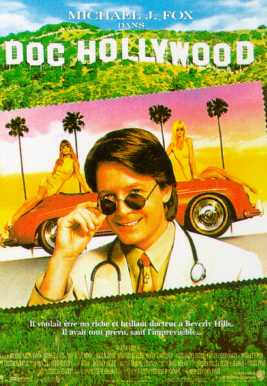
I took my son to see the movie "Cars" today. I was going to write a long post comparing the movie to "Doc Hollywood," but someone at Canada.com has already done so:
The makers of Doc Hollywood called. They want their movie back.
Cars rolls along like an animated, automotive version of that 1991 Michael J. Fox gem, from its basic plot points to its feel-good conclusion.
Stop us if you think you've heard this one before: A young hotshot on his way to Los Angeles causes a crash and gets stuck in a small town. Before he can leave, he must spend several days doing community service, only to find out that he likes the simple life there and that he's learned more about family and friendship than he'd ever imagined.
The main difference in Cars is that the characters are . . . well, they're cars, hence the title.

I was unable to find any attributation to the movie/book "Doc Hollywood" on the "Cars" website, or when I was watching the credits in the theatre. If Neil Shulman, MD didn't get a cut of the movie "Cars," he should sue.